

Airline and travel industries see no immediate relief from Iran ceasefire
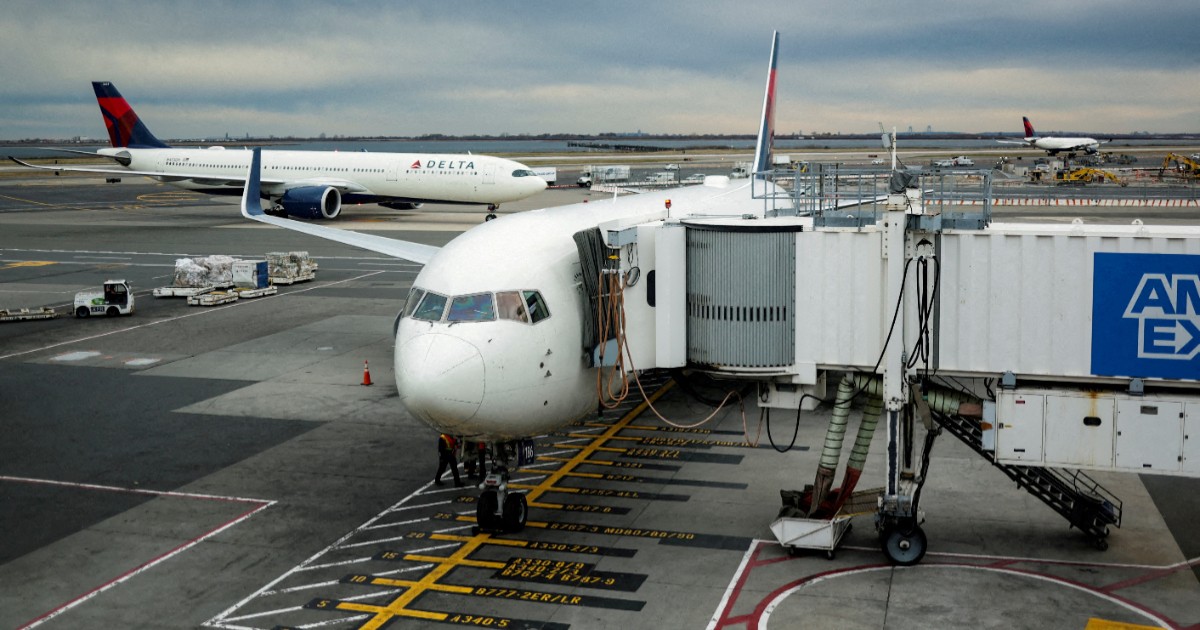
Delta Air Lines planes at John F. Kennedy (JFK) International Airport in New York City, US on Nov 18, 2025.
PHOTO: Reuters file

SINGAPORE/HONG KONG — US President Donald Trump's two-week ceasefire with Iran is unlikely to bring quick relief to the global aviation industry, executives said on Wednesday (April 8), even as airline shares surged on hopes the deal could ease the worst crisis airlines have faced in years.
Industry officials warned that jet fuel supplies will remain tight and costly for months, even if Iran reopens the Strait of Hormuz, after damage to refining capacity across the Middle East.
"If it were to reopen and remain open, I think it will still take a period of months to get back to where supply needs to be given the disruption to the refining capacity in the Middle East," Willie Walsh, director general of the International Air Transport Association (IATA), warned.
Delta Air Lines on Wednesday forecast lower-than-expected profit for the second quarter and said it would cut capacity to try to offset about US$2 billion (S$2.55 billion) in extra fuel costs it expects to book during the period. The airline expects to pay roughly US$4.30 a gallon for jet fuel in the June quarter, more than double last year's price.

Fuel, typically airlines' second-largest cost after labour, accounts for about 27 per cent of operating expenses. Jet fuel prices have more than doubled since the conflict erupted, far outpacing a roughly 50 per cent rise in crude prices before the ceasefire.
Iran's closure of the Strait of Hormuz choked global fuel supplies, forcing airlines to hike fares, cut flights, add refuelling stops and carry extra fuel. Some carriers have cancelled services to and from the Gulf - a key aviation hub linking Europe and Asia - citing safety concerns.
Oil fell below US$100 per barrel after Trump said he had agreed to the two-week ceasefire with Iran, subject to the strait's immediate and safe reopening.
But comments from executives and experts across the industry highlight deepening pain for airlines facing a doubling of jet fuel prices and worries about constrained supplies.
European airlines are working with suppliers and airports to assess jet fuel stocks, lobbying group Airlines for Europe - whose members include Ryanair, Lufthansa and British Airways-owner IAG - said, adding that it was "too early to tell" how quickly supply could recover.
An EU coordination group on oil said after meeting on Wednesday that it saw no immediate risk to oil supply in April.
Attacks on Gulf countries have continued despite the announced ceasefire. The Kuwaiti army said it had faced intensified Iranian attacks since early Wednesday.
Drone strikes caused extensive material damage to oil infrastructure, power plants and water desalination facilities. The United Arab Emirates said it was dealing with Iranian missile and drone attacks, while Bahrain said that an Iranian attack damaged houses in the Sitra area.
Despite the turmoil, airline and travel stocks rallied on expectations the ceasefire could mark a turning point. Shares in Qantas jumped more than 9 per cent, Air New Zealand rose over 4 per cent, Cathay Pacific gained 5 per cent and IndiGo climbed 8 per cent.
In Europe, TUI surged more than 12 per cent, Air France-KLM rose around 14 per cent, Lufthansa gained about 11 per cent and Wizz Air added 10 per cent, outperforming broader equity markets. US airline shares also advanced.
While jet fuel supply disruption remains a risk, the ceasefire provided "a buying opportunity for quality airlines", analysts at Panmure Liberum said in a note.
Tourism, however, also faces a long recovery. TUI said two of its cruise ships, stranded in Abu Dhabi and Doha since the conflict began, would take at least four weeks to return to service once conditions allow.
Even if key transit hubs reopen, the Middle East's US$367 billion tourism industry may need months to recover in a best-case scenario, Oxford Economics economist Aaron Goldring said.
"You basically have a tail of around seven months post ceasefire of sentiment impact," Goldring said, "with the perception of safety coming back quite gradually."
[[nid:733218]]