Public transport operator SMRT on Friday (Aug 28) launched a transformative initiative that will change how it manages and maintains its bus fleet.
Dubbed "Bus 4.0", the $6 million initiative will allow SMRT to identify risks earlier, coordinate responses faster and act before issues affect commuters, the operator said in a media release.
It is made possible by the installation of telematics across the entire bus fleet managed by SMRT.
This, in turn, allows SMRT to see the entire network, identify emerging problems, and quickly focus on what needs attention, said SMRT chairman Seah Moon Ming during the launch at Gali Batu Depot.
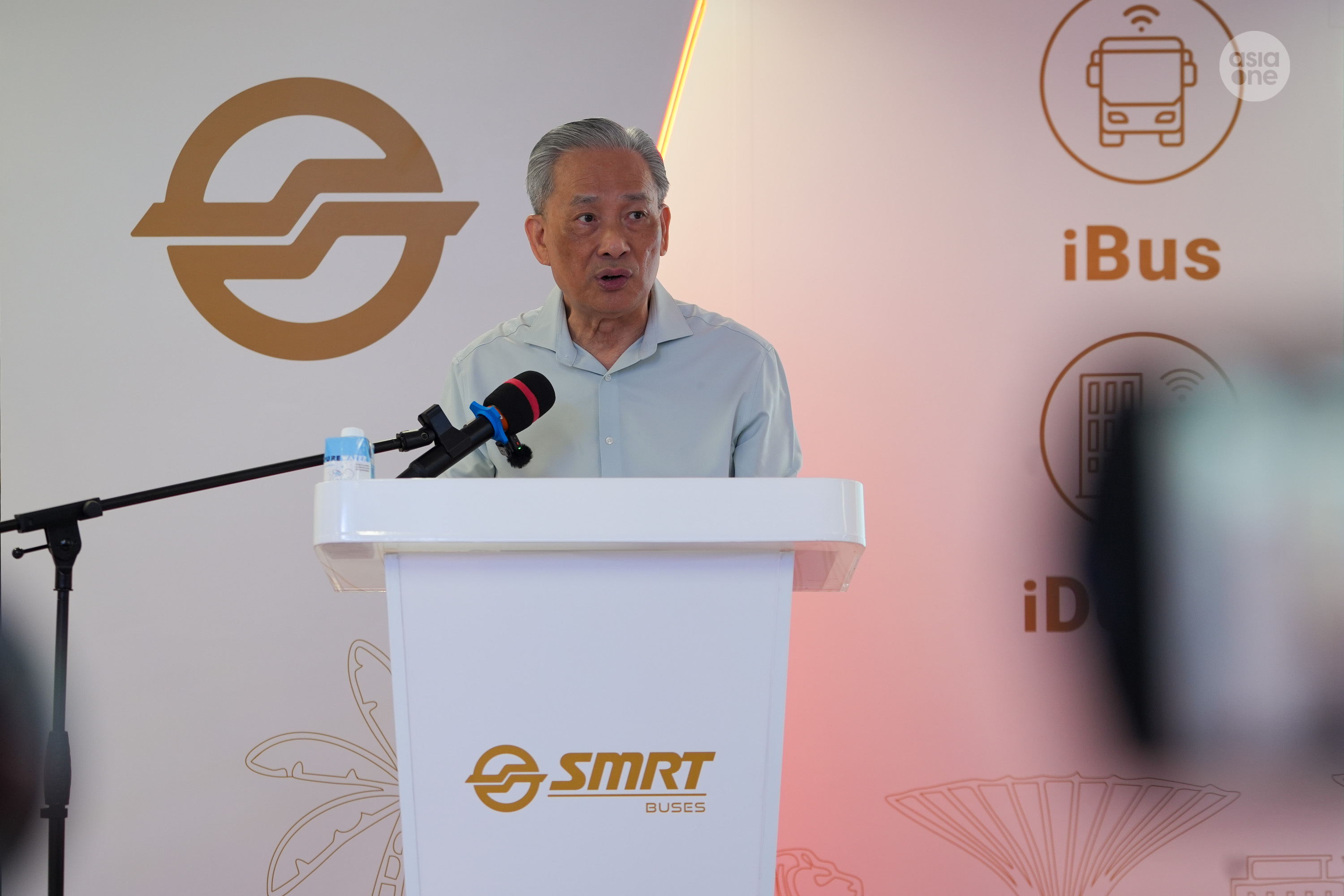
Contextualising the three deliverables for Bus 4.0, Seah said the initiative is ultimately about promises to people — safer journeys, more reliable services and faster responses.
Seeing, coordinating and acting
In a factsheet to the media, SMRT said the initiative is built around the pillars of intelligent Bus (iBUS), Intelligent Operations Control Centre (iOCC), Intelligent Depot (iDepot) and Intelligent Workforce (iWorkforce).
It explained that with the Bus Telematics System (BTS) deployed across its entire fleet, real-time collection of operational, safety and vehicle health data is enabled.
This then enables bus controllers to conduct safety monitoring for bus captains, such as watching out for fatigue.
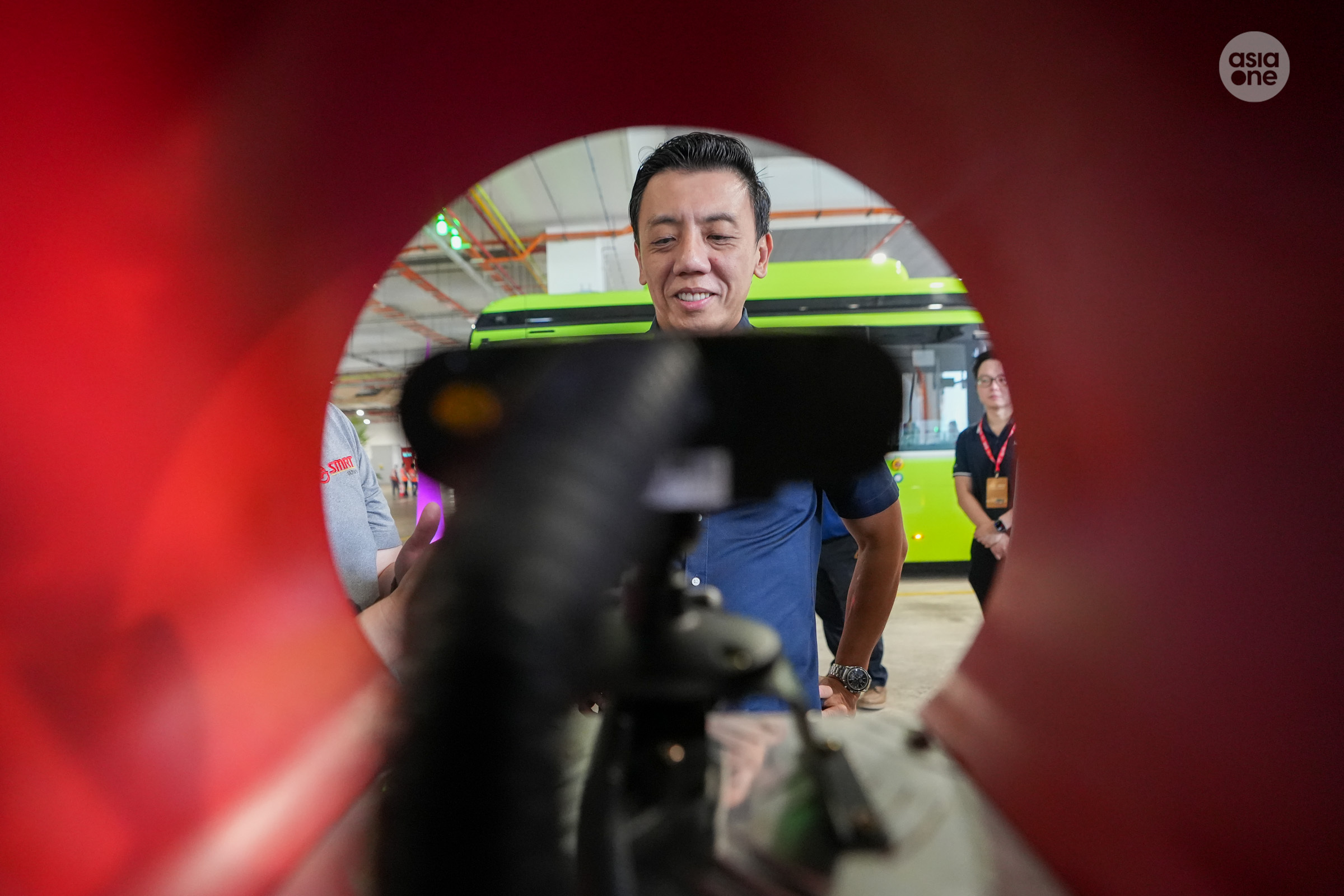
It also allows controllers to identify risks of bus bunching, when two or more buses on the same service arrive at a bus stop together, causing longer gaps and waiting times between subsequent bus arrivals.
Other uses include vehicle health monitoring, bus lane and road hazard detection, and detecting when wheelchair users board so controllers can check whether wheelchairs are properly secured.
The iOCC is akin to SMRT's nerve centre for bus operations, providing controllers with a single, consolidated view of bus operations.
It brings together real-time information on fleet deployment, bus health, electric bus charging, road traffic conditions and safe driving alerts to support monitoring and timely intervention.

Illustrating how this works, SMRT said that about 20 controllers used to oversee more than 1,200 buses across its network, with each controller responsible for about 60 buses.
They relied heavily on updates from bus captains to understand ground conditions while guiding them through incidents. This runs the risk of attention saturation, where emerging issues could be missed.
With the new iOCC, controllers now have an integrated view of the real-time information, alongside artificial intelligence-driven prompts that flag potential issues.
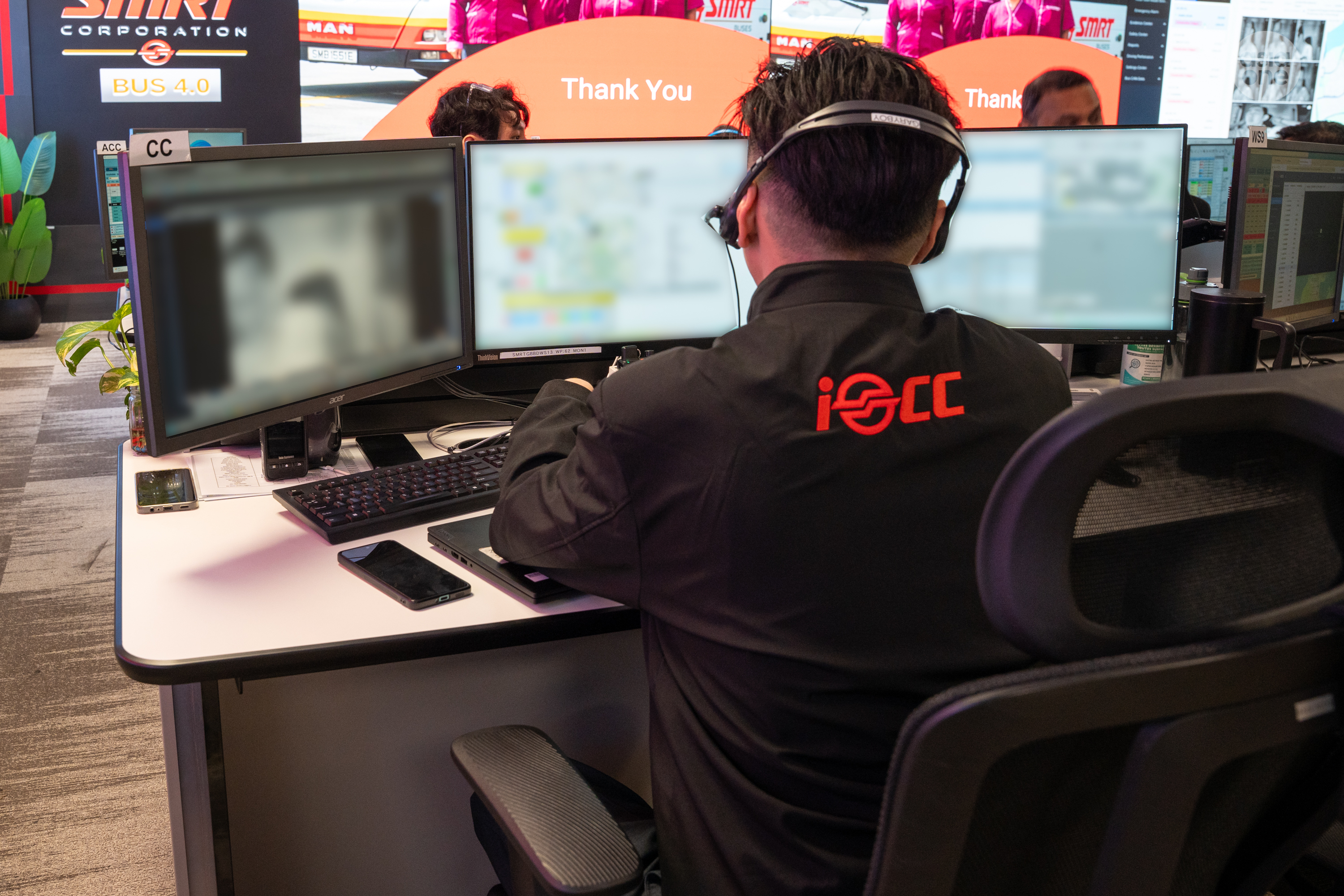
Each alert is also tied to predefined intervention thresholds, allowing controllers to prioritise responses and actions.
This will also be useful during rail disruptions, allowing the iOCC to coordinate buses, taxis, private-hire vehicles and information dissemination from a single command centre.
Machines and people
The iDepot is expected to advance smarter bus depot operations and data-driven maintenance through automation and predictive analytics.
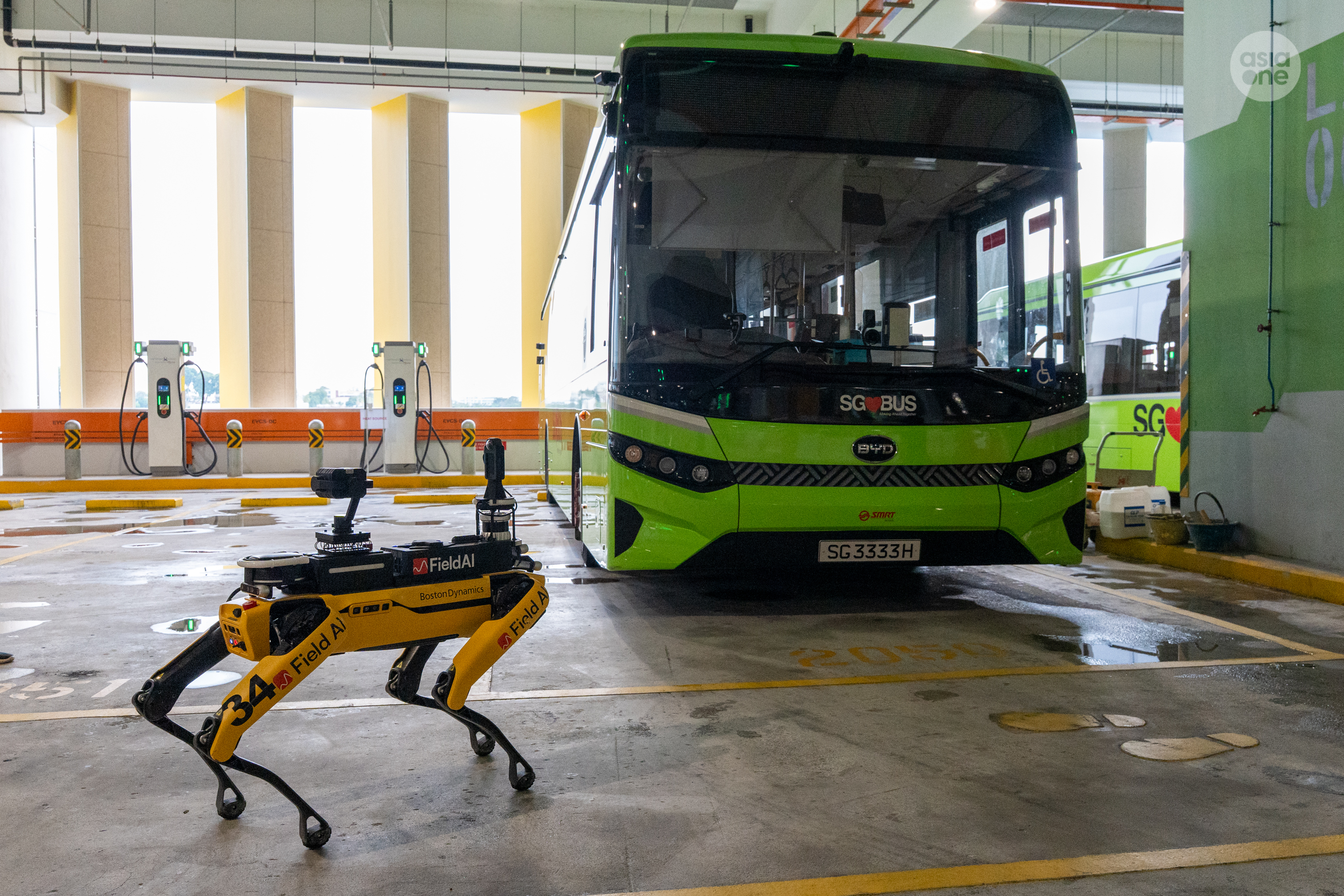
In particular, use of the autonomous surveillance robot dog — to patrol the depot — using infrared sensors to monitor buses and charging areas for abnormal heat.
SMRT said this provides depot teams with early warning of potential overheating so they can intervene promptly and strengthen fire safety.
It can also be used to automatically identify and record bus registration numbers across the multi-storey depot, thereby supporting the bus locator system, assisting bus captains in locating their assigned buses more quickly.
A second autonomous robot is deployed to perform routine cleaning while patrolling the depot for security anomalies.
Another feature of the smart depot is the use of Internet of Things (IoT) sensors on critical equipment, such as chiller plant systems, to conduct continuous equipment monitoring.
Combined with artificial intelligence, the system analyses equipment behaviour to provide early warning of abnormal operating conditions and signs of equipment deterioration before faults occur.
But technology must benefit people, said the SMRT chairman.
This is why its fourth pillar, iWorkforce, is about equipping bus captains, service controllers and technicians with digital tools, training and incentives — as the operator builds up a future-ready workforce.
To this end, it has rolled out a safe driving incentive tied in with its bus captain management system, where bus captains can review their safety-related alerts and strive for improvements.
Under the incentive, bus captains can earn up to $600 in grocery vouchers annually.
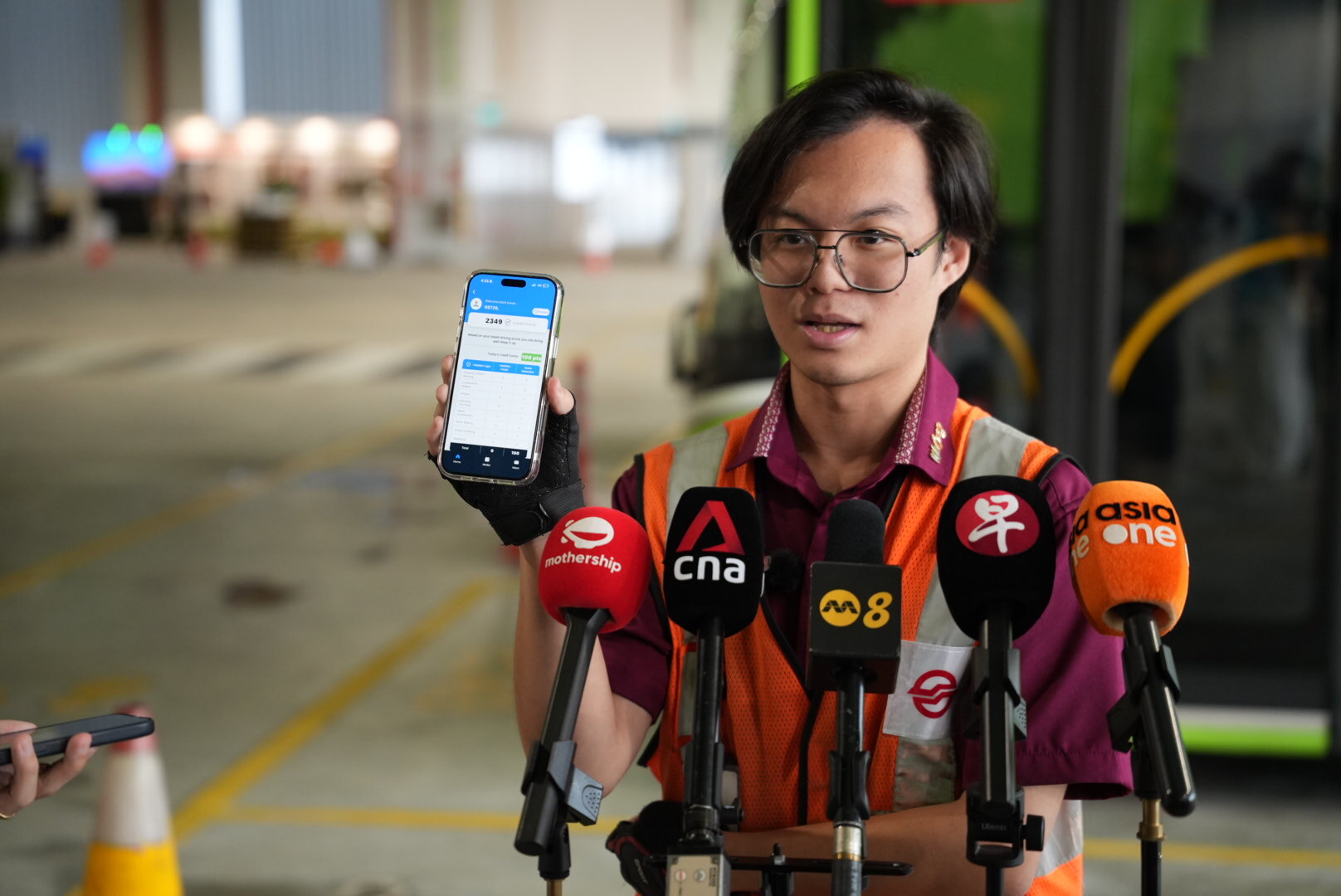
The operator's youngest bus captain Jayrius Ong at 23 years old, has found the scheme to be useful.
Showing the media his recent driving record on Aug 21, Ong noted that he incurred seven counts of following too closely to traffic ahead.
"With this system now, I am more aware of what my issues are, and now you can see my record on the next day (Aug 22)," Ong said, proudly showing his clean record the following day.
"See? I got 100 points. Zero violations throughout my entire duty shift," a beaming Ong added.
SMRT has also rolled out a skills allowance for its service controllers to recognise the larger role they now play in assessing risks and preventing incidents.
This is co-supported through the National Trades Union Congress's Company Training Committee grants secured in partnership with the National Transport Workers' Union.
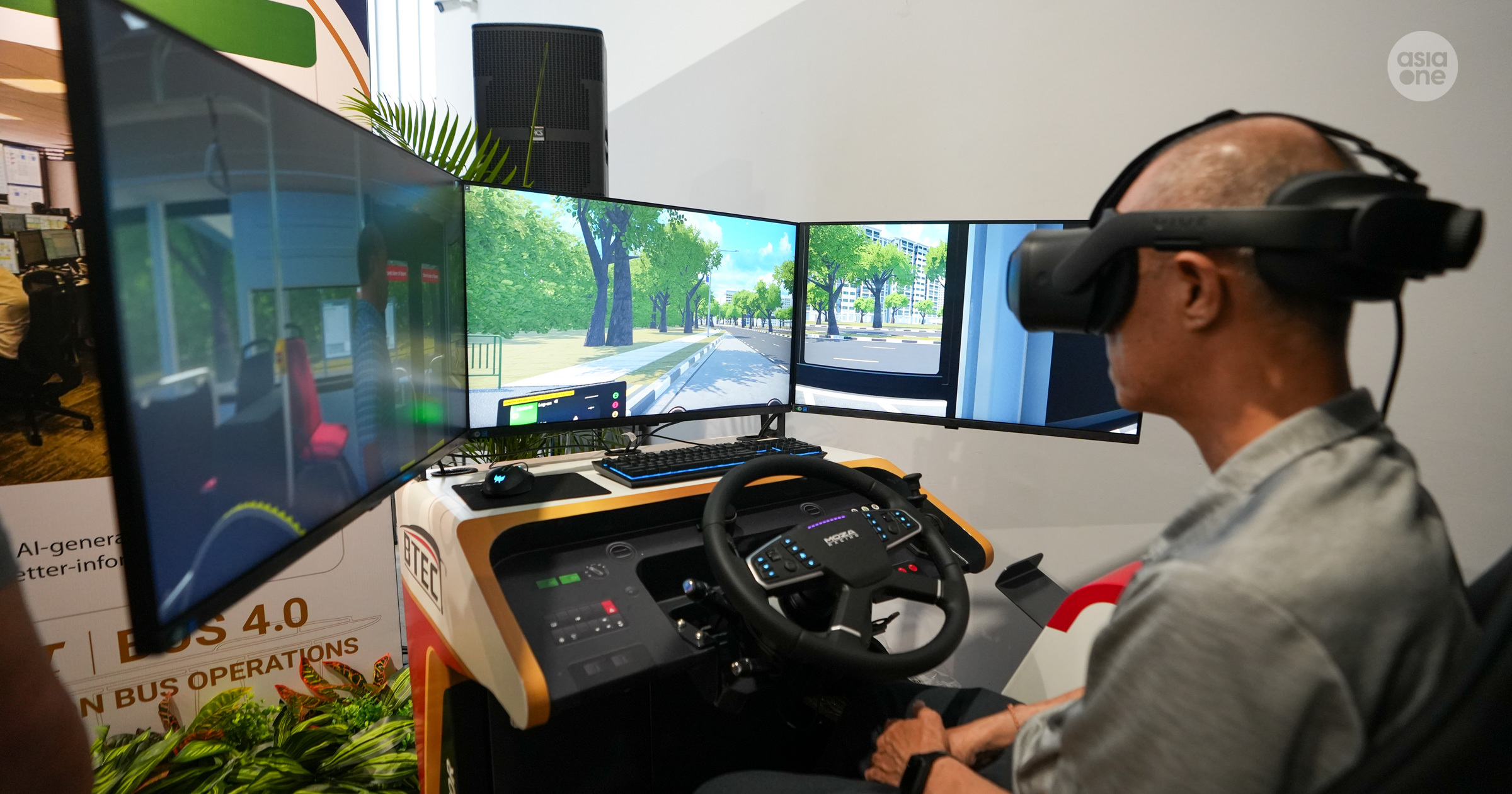
Bus captains and technicians are also provided with virtual reality training and assisted reality support respectively.
Summarising what Bus 4.0 means for SMRT, its chairman highlighted that the initiative is not about building a more impressive control centre. Instead, it is about building a better bus operation, he said.
"All these help us to deliver safer and more reliable journeys," Seah added.
[[nid:741984]]
[email protected]




