Singapore is setting aside $112 million over the next five years as part of sustained investment in research and innovation that will shape how the city state builds, maintains and renews its built environment.
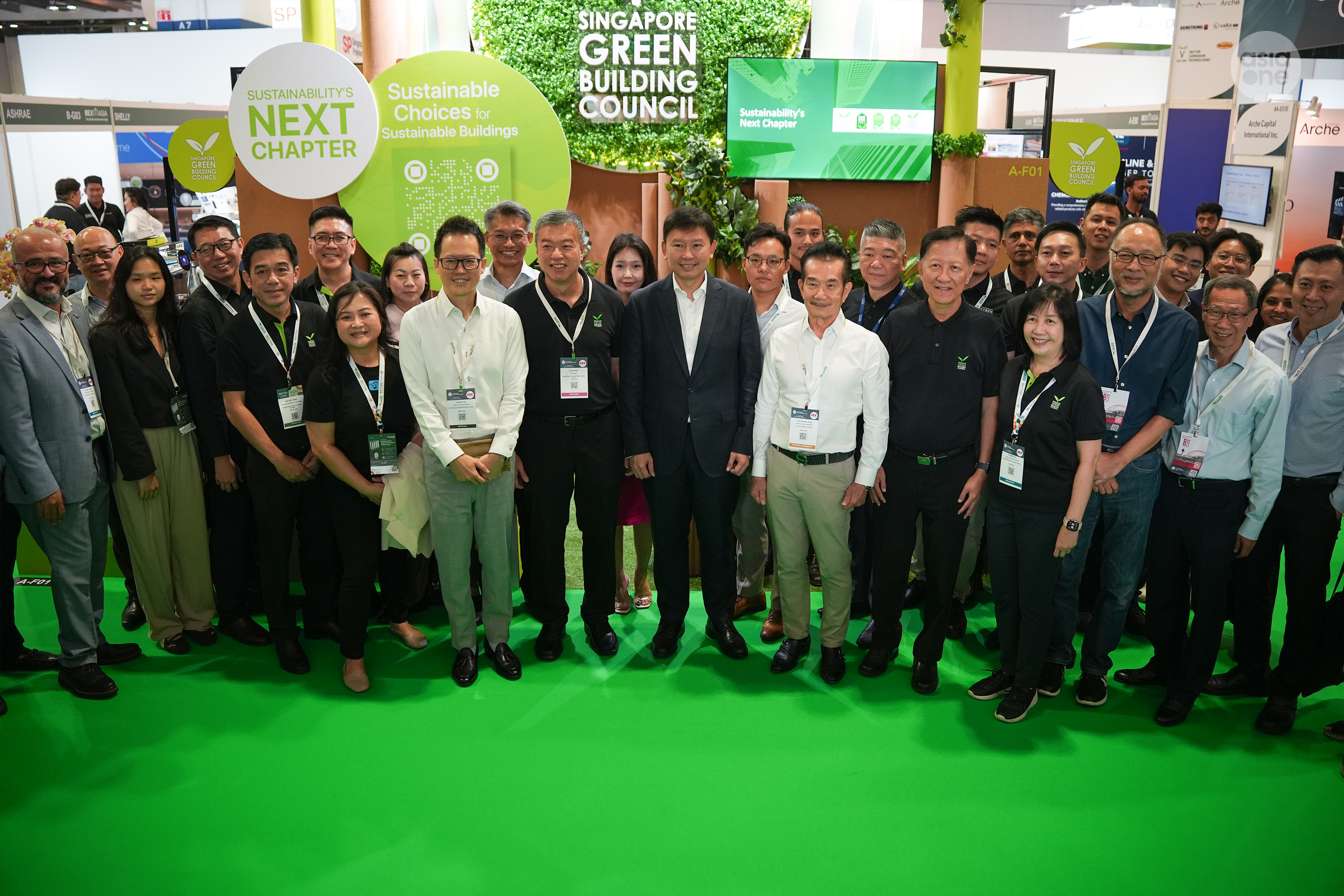
The planned investment, under the National Research Foundation's Research, Innovation and Enterprise (RIE) 2030, was announced by Minister for National Development Chee Hong Tat at the International Built Environment Week held at Marina Bay Sands on Wednesday (Sept 2).
He also announced a refresh of Singapore's green building certification scheme — BCA Green Mark version 7 — that will see a new energy rating that focuses on a building's energy performance, and a new accreditation scheme for site supervision firms amid increasingly complex projects and the uptake in adoption of remote site supervision.
At the heart of these initiatives is ensuring that technology and innovation can serve the evolving needs of the industry and work well with people and process, Chee said.
"What matters is creating practical, deployable solutions that save time, costs, and manpower, while maintaining high standards of safety and sustainability."

Cities of Tomorrow R&D programme
The setting aside of $112 million for the "Cities of Tomorrow" research and development (R&D) programme over the next five years under the RIE2030 tranche reflects the Government's continued commitment to investing in innovation, Chee said.
He added that this includes partnering the industry to translate good ideas into practical solutions that can be commercialised and deployed in Singapore, and even, taken to markets overseas.
RIE2030 will focus on safer and more productive demolition as Singapore rejuvenates more parts of the city state; smarter ways of maintaining buildings as they age; decarbonisation; and, helping promising innovations move towards wider industry adoption.
But Chee highlighted that Government funding and research alone are not enough.
"The true test of a strong research programme lies in whether its solutions can be taken up and make a real difference on the ground," he said.
To this, the minister urged companies to join the upcoming RIE2030 grant call and co-develop new solutions, participate in pilot trials, and adopt promising innovations in their projects.
More details on the grant call will be shared at its launch later this year.
BCA Green Mark version 7
And as Singapore builds faster and smarter, it must also build greener, Chee said.
He noted that the Building and Construction Authority's (BCA) Green Mark accreditation scheme, launched in 2005, has evolved alongside Singapore's sustainability ambitions and helped raise standards across the industry.
The national development minister emphasised that the scheme is important because the built environment sector accounts for over 20 per cent of Singapore's carbon emissions.
"Greening our buildings is an important part of our efforts to reduce Singapore’s carbon footprint and achieve our targets under the Singapore Green Building Masterplan and, in turn, the Singapore Green Plan 2030," he said.
The launch of BCA Green Mark version 7 is to align with the Singapore Green Building Masterplan 2030 of greening 80 per cent of buildings by gross floor area by 2030; having 80 per cent of new developments as super low energy buildings from 2030; and achieving an 80 per cent improvement in energy efficiency from 2005 levels by 2030.
The refreshed framework will focus on: greening more of Singapore’s existing building stock, raising the bar for energy efficiency, and making the scheme more flexible and business friendly.
BCA also stated in a media release on Wednesday that it will introduce a new super low energy-70 (SLE70) tier that is achieved by delivering over 70 per cent energy savings against its building typology's 2005 baseline.
"This challenges Singapore's most progressive developers to demonstrate leadership and strive towards the national target of 80 per cent energy efficiency improvement," the authority said.
Alternative cooling technologies (ACTs), including hybrid cooling, active chilled beams, and passive displacement cooling, which are said to be able to achieve up to 50 per cent energy savings compared to conventional air-conditioning systems, will also be recognised under the refreshed Green Mark.
Nearly 50 buildings in Singapore have reportedly adopted ACTs.
Other enhancements in Green Mark version 7 includes more efficient recertification processes for building owners with large portfolios of similar properties, by allowing them to recertify multiple buildings concurrently, and increasing access to green financing.
New accreditation scheme for site supervision firms
Meanwhile, as Singapore shifts towards building stronger firm-based site supervision capabilities, the Singapore Accreditation Council will be launching the Site Supervision Firm Accreditation Scheme from this month, Chee said.
"Licensed site supervision firms will play an important role in helping to keep pace with the demands of increasingly complex projects and new technological developments, while ensuring quality and safety," he added.
From 2028, developers and builders are required to engaged licensed firms to supervise building works for projects exceeding $75 million in value.
Under the scheme, firms that wish to be licensed will first need to obtain accreditation.
The accreditation scheme will assess whether firms have the necessary governance structure, systems and processes in place to ensure efficiency and quality control in site supervision, and at the same time effectively harness technology.
This also requires accredited firms to put in place the necessary processes and procedures to deploy remote site supervision effectively.
Chee had earlier said at the Association of Consulting Engineers' 55th anniversary dinner on July 15 that adoption of remote site supervision is expected to help qualified persons to save the time spent travelling between project sites to conduct routine inspections.
In doing so, the time saved can improve their productivity and optimise manpower deployment, while enhancing workplace safety, the national development minister said then.
He encouraged site supervision firms looking to take on larger projects to start preparing early, and to obtain accreditation ahead of the new licensing requirements from 2028.
Rounding up his opening remarks, Chee encouraged researchers, companies, and professionals to work alongside the Government to invest in people, and embrace innovation and technology.
"If we continue to work together, I am confident we can create a built environment that is greener, safer and more productive," he said.
[[nid:743621]]
[email protected]




