She can switch effortlessly between Hokkien, English, Tamil, Malay and even conversational Mandarin.
The multilingualism of 73-year-old S Sarojini reflects a life shaped by Singapore's multicultural fabric, from growing up in a kampung to being part of a family that spans different races, religions and traditions.
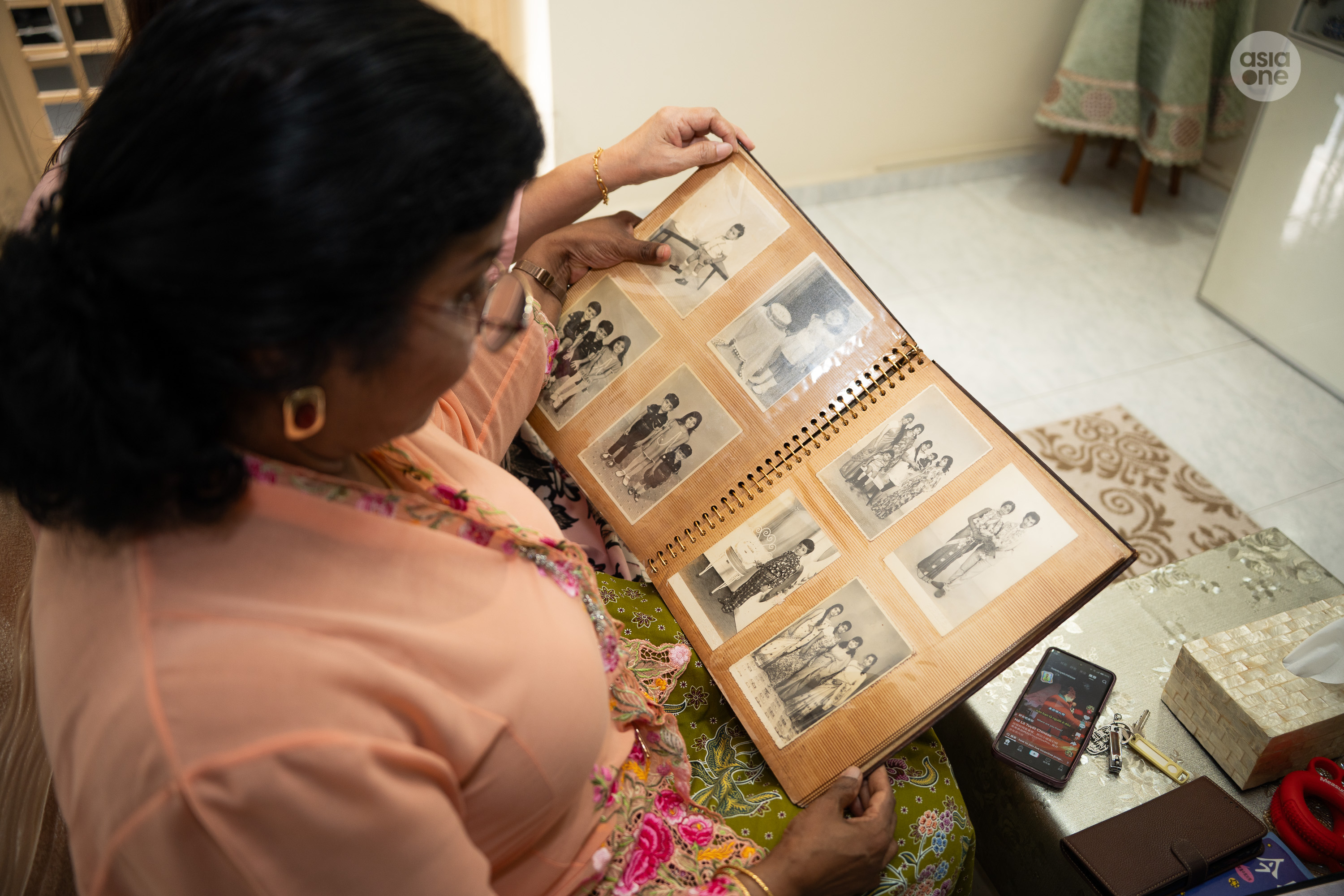
From a young age, Sarojini was constantly exposed to a medley of languages in the kampung. As she listened to her elders chat with neighbours and friends of other races, she gradually picked up the various languages herself.
Growing up multilingual
"My mother spoke to us in Malay and my father spoke to us in Tamil," she said, explaining that her father hailed from Pudukkottai, India, while her mother was from Malacca, Malaysia.
The mother of three ended up taking Malay as her mother tongue, as her convent school did not offer Tamil.
Watching her mother persevere in speaking Tamil despite her struggles helped Sarojini appreciate the language from a young age. She later learnt to read and write Tamil to honour a promise made to her late uncle.
These days, Sarojini feels most comfortable speaking Hokkien after decades of using the dialect both at work and in her community.
She spent 30 years working at a trading firm, where she often spoke Hokkien with spare parts suppliers.
Even in her current role as an administrator at a consultancy firm, many of her Chinese clients converse with her in the dialect.
Together with her regular interactions with elderly residents in the neighbourhood, it has become the language she speaks most naturally.
Many faiths, one family
Sarojini's multilingualism is mirrored in her diverse family tree.
She traces her roots to a Chinese great-grandmother and an Indian great-grandfather, whose son later married her Peranakan grandmother.
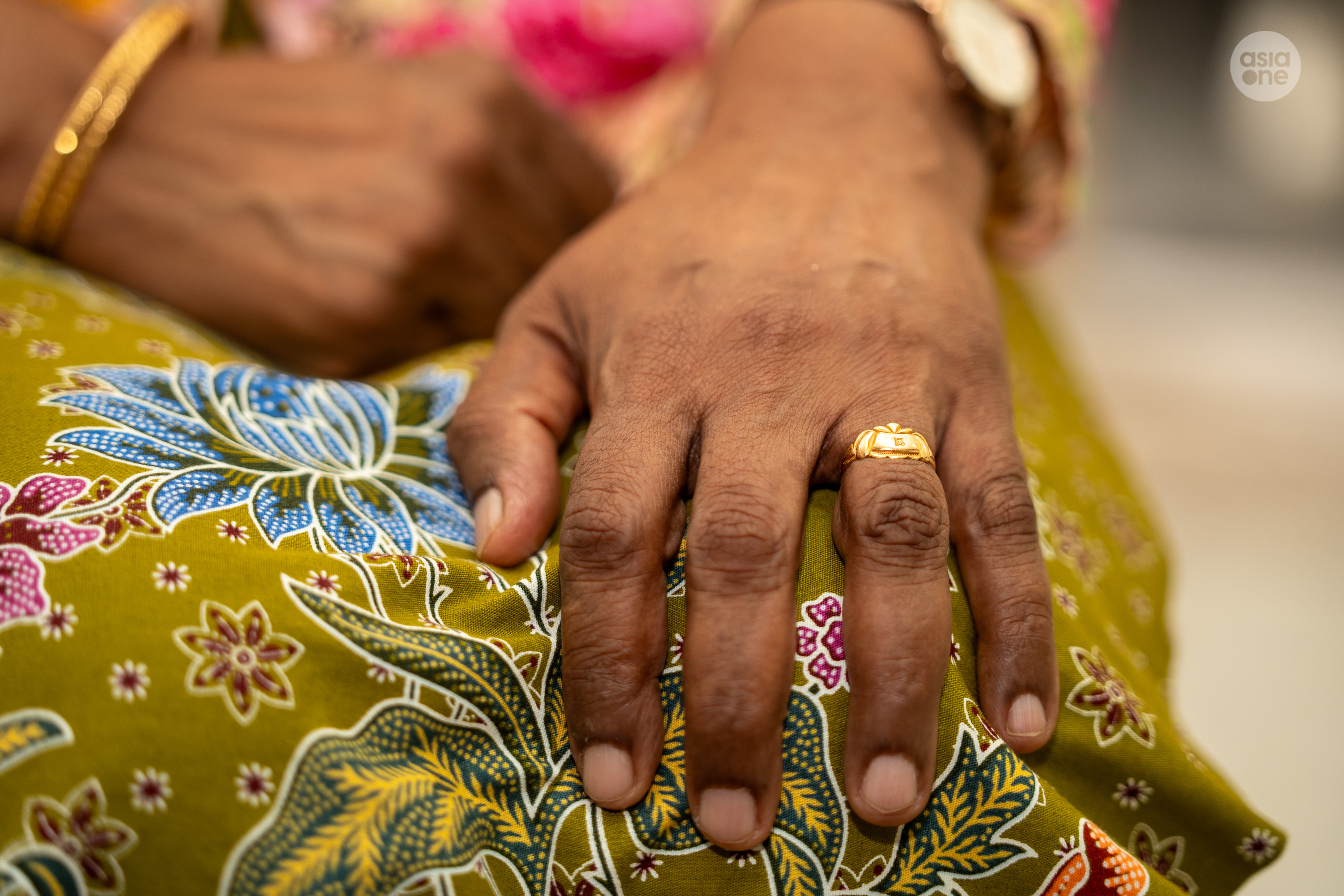
The family's diversity extends beyond race. Three of Sarojini's 11 siblings, who were raised Hindu, later converted to Islam.
"One of [my brothers] was always going to the mosque to meet his friends," said Sarojini. Another converted because he married a Malay woman.

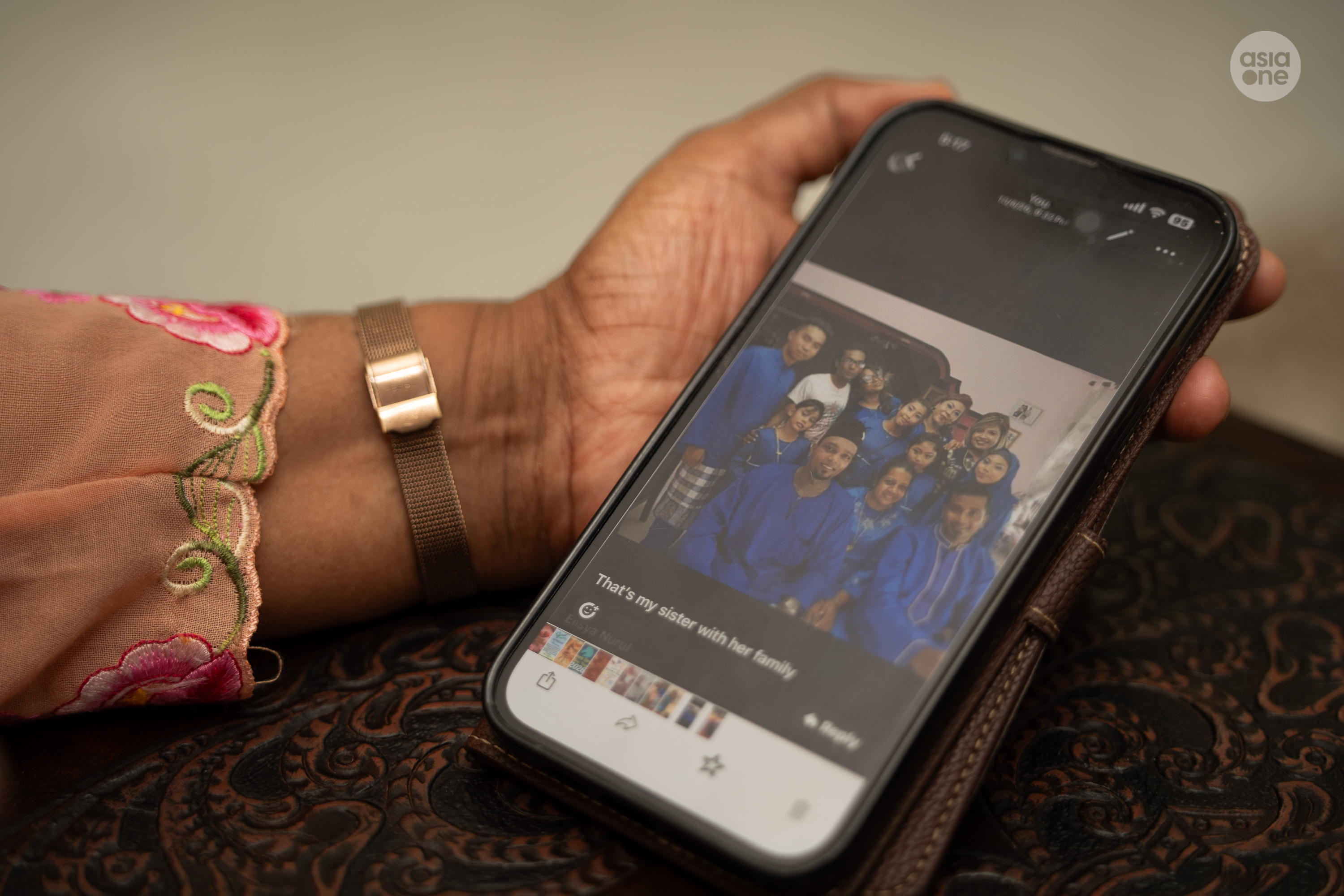
Her younger sister initially married a Catholic man, but struggled to conceive.
"One of my Muslim brothers prayed for her and asked her to convert to Islam," shared Sarojini, adding that her brother claimed her sister would get pregnant if she did so.
"And it happened. After that, she had three kids," Sarojini quipped.
Despite the conversions, Sarojini said her parents never objected, as they prioritised their "children's happiness".
"My father didn't care about religion. As long as the family's harmony [was] there, and we make the person who [joins] the family happy, he [was] happy."
Sarojini shares the same outlook, giving her three daughters, now aged 44, 46 and 47, the freedom to choose how they lived their lives.
"I told them, after 21, whatever you want to study or whoever you want to marry, you handle yourselves."
She supported her first two daughters when they chose to marry Catholics, although she and her husband are Hindus.
All three daughters are also free thinkers now, although they continue to practice certain Hindu traditions.
Celebrating across cultures
Sarojini's family embraced their cultural diversity, celebrating everything from Deepavali to Hari Raya.

"My Muslim brothers used to carry kavadi [before converting]," said Sarojini, referring to the ceremonial frame carried by Hindu devotees primarily during Thaipusam as an act of spiritual devotion.
She recounted how her daughters donned sarong kebayas during Hari Raya this year and they all enjoyed traditional Malay dishes such as rendang, sambal goreng, lontong and sayur lodeh at her brother's home.
Whenever her Muslim siblings visit her 4-room flat in Woodlands, she buys halal chicken and avoids cooking pork.
"I don't cook food they cannot eat," Sarojini said, emphasising her respect for their religious beliefs.
While her siblings' conversions never caused lasting tensions or family rifts, there were moments when religious obligations and family traditions intersected.
After converting to Islam, one of her brothers was spiritually conflicted about whether he could perform his late father's funeral rites, a responsibility traditionally undertaken by the youngest son in Hindu families.
Unsure if he could wear the poonal, a sacred thread worn as part of the rituals, he sought permission from his father-in-law.
"He's your father. You have the right to do it for him. Whether you convert or not, you still have to do your duty [as a son]," his father-in-law told him.
Since their parents' passing, Sarojini and all her siblings have continued to visit the temple together yearly to pay their respects.
"We have lived together harmoniously [and] we'll [continue to do so] till the end."
Speaking the language of trust
As the vice-chairperson of the Sembawang West Zone B residents' network under People's Association, Sarojini's multilingualism has helped her connect with residents from different backgrounds.
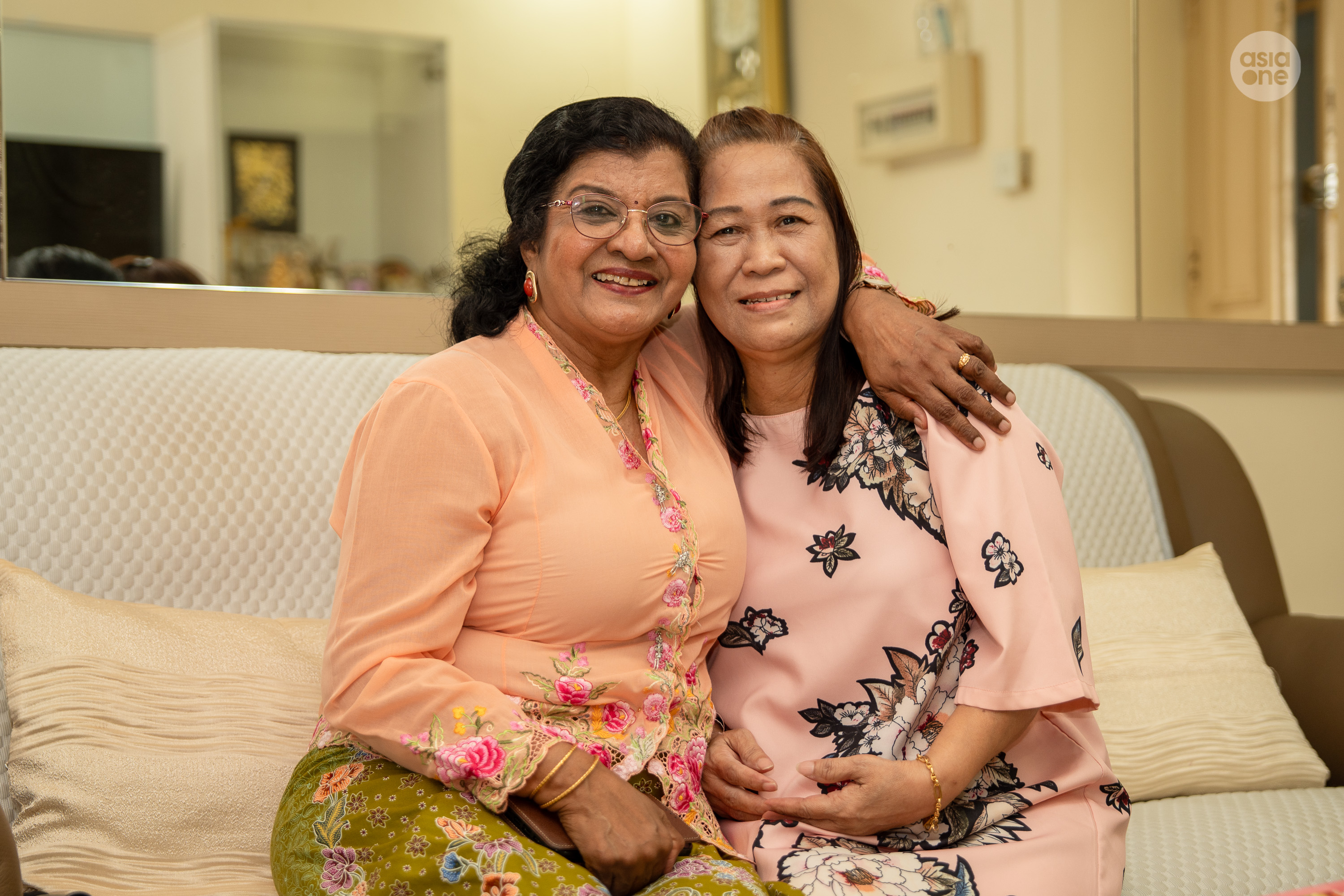
She recalled noticing that an elderly man who regularly tended the neighbourhood garden had not been seen for several days. Concerned, she visited his flat, where his wife answered the door.
"I asked her in English, 'Where is uncle?' and she replied with one word, 'sakit'," said Sarojini, referring to the Malay word for "sick".
Sensing the woman was hesitant to speak, Sarojini switched to Hokkien and Malay, asking if she could enter the flat and visit the 'uncle'.
The woman then let her in because she realised that Sarojini "was sincerely asking about the old man".
"When I [can] speak their language, I [can better] address their concerns," she said, noting how residents were more willing to open up to her and felt a greater sense of sincerity as a result of her code-switching.
Sarojini believes her multicultural upbringing has also taught her to empathise with people regardless of race or religion.
"I learn to respect them for who they are."
"We live in Singapore, a multiracial society. When we learn to respect each other's culture and religion, there will be no issue of any enmity."
To Sarojini, Racial Harmony Day is not only a yearly celebration on July 21, but also a reminder that Singapore's strength comes from our diversity and ability to live together as one community.
[[nid:720530]]
[email protected]




