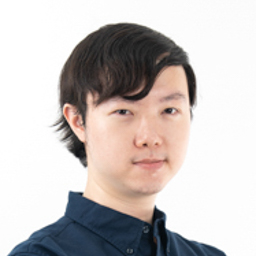
As Singapore's population ages, the Land Transport Authority (LTA) is researching ways to enhance the transport system for those experiencing cognitive decline, LTA's chief operating officer Lim Zhi Jian said on Thursday (Nov 5).
Lim was speaking with the media at the Singapore Urban Mobility Week 2026 from Nov 4 to Nov 6 at the Suntec Singapore Exhibition and Convention Centre.
Earlier in the day, Lim was part of a roundtable attended by industry experts where he discussed topics such as the development of mixed-use districts, improving active mobility and providing for elderly commuters.
Singapore officially became a super-aged society according to the figures published by the National Population and Talent Division on Sept 25 in its annual Population In Brief report, highlighting how over 21 per cent of the citizen population is aged 65 and older.
Speaking with AsiaOne, Lim explained that LTA has been actively stepping up infrastructure provisions, citing how there are more lifts along the Thomson East Coast Line.
"We are looking at the rejuvenation of our older lines... to meet the needs of our ageing commuters," he said.
Addressing the possibility of cognitive decline in elderly — such as dementia — Lim highlighted how LTA has already begun taking measures such as the implementation of quiet corners in commuter care rooms at bus interchanges and the Friendly Streets initiative.
The Friendly Streets initiative, introduced in 2023, aims to make daily walking and cycling journeys safer, more convenient, and more comfortable.
LTA is also working with research institutions, universities and other Government agencies to delve further into the matter, he said.
From this, the authority intends to gauge what other enhancements can be made to make public transport "easier and better" for people with different needs.
Population growth, commuter crowds
On the topic of transport infrastructure amid Singapore's growing population, Lim said the island's transport system has been keeping pace.
The Republic's population hit a record 6.21 million driven by a rise in foreign residents, according to the Population In Brief report in September.
At present, Singapore has around 270km of rail, which will expand to 360km within the next decade, while bus services and connections have also grown to meet the different demands of the public, he explained.
Lim told AsiaOne: "I think some of the issues about crowding aren't so much about population size — [once you reach a] certain capacity, the inherent nature of transport is actually about managing peaks."
He pointed to the existing programmes to shift peak hours, such as free off-peak travel along the North-East Line.
"In doing things like that, I think we strike the good balance because we even out the crowding and at the same time give commuters an incentive — and they get to save on their own travel costs as well."
Stating that the system is still growing, Lim continued: "It's really more about how do we try to also optimise the demand patterns such that we reduce the overall crowding, so that everyone stands to gain."
'Hierarchy of needs' for transport
Drawing comparisons between Singapore's transport system and Maslow's theory of a hierarchy of needs, Lim also shared the aims of LTA's Land Transport Master Plan (LTMP).
Maslow's hierarchy of needs explains how human motivation progresses from basic physiological needs to higher-level growth needs.
Singapore has managed to achieve safety, security and hygiene, which he terms the base layer on the hierarchy of needs.
The next level is reliability, predictability and convenience, while the third layer — which the LTMP focuses on — consists of the experience of travel.
"It's about transport being comfortable, pleasant, easy and seamless... that is the level that this LTMP is focused on," he said.
Lim explained that the prior two layers are "no longer enough" for Singaporeans, and that the authority aims to make trips more pleasant and comfortable while serving the community.
He added that a primary challenge lies in commuter behaviour — a law against nuisance and disruptive behaviour on public transport recently came into effect on Sept 23.
Aside from laws, Lim emphasised that a culture of watching out for each other and being thankful to transport workers are also important in improving commuter behaviour.
"The reality is that for our transport workers, they play a critical role in terms of the comfort of a journey... promoting norms such as thanking your bus captain... adds to both sides — we feel better, and it makes our bus captain's lives better as well," he advised.
[[nid:749056]]
[email protected]