SINGAPORE - Locally grown vegetables from at least three farms here will soon no longer be available at supermarket giant FairPrice, The Straits Times has learnt.
The decision, part of FairPrice's regular product review, highlights the tussle between providing customers with the best value-for-money products and the national effort to support local growers so as to improve food resilience, say industry players.
The affected urban farms are Artisan Green, SG Veg Farms and Netafarm - a farm and R&D facility in Neo Tiew that has decided to significantly scale down following the news.
The farms had been supplying vegetables such as Asian leafy greens and kale since the early 2020s.
FairPrice Group told ST that it gathers feedback from suppliers and farms and data from stores to better understand evolving consumer demand, identify opportunities to improve its assortment and offer the right vegetable varieties at the best value.
"We are committed to ensuring a stable supply of quality, affordable fresh produce for customers across our network. Part of these efforts involves continually refining our assortment to provide customers with a more relevant and value-driven selection of produce," said its spokesperson.
"At the same time, we remain committed to supporting local production through our longstanding partnerships with local farmers and producers, alongside a range of initiatives to strengthen Singapore's local food ecosystem."
There are more than 90 vegetable farms in Singapore, according to the Singapore Food Agency's (SFA) list of land farms, but only a fraction of these farms sell their produce in FairPrice and other supermarkets. Other retail options include online grocers like RedMart, wet markets, buying directly at the farms, online orders and home delivery. Farms also supply to restaurants and hotels.
Local vegetable production rose slightly in 2025 to 16,600 tonnes, up from 16,400 tonnes in 2024.
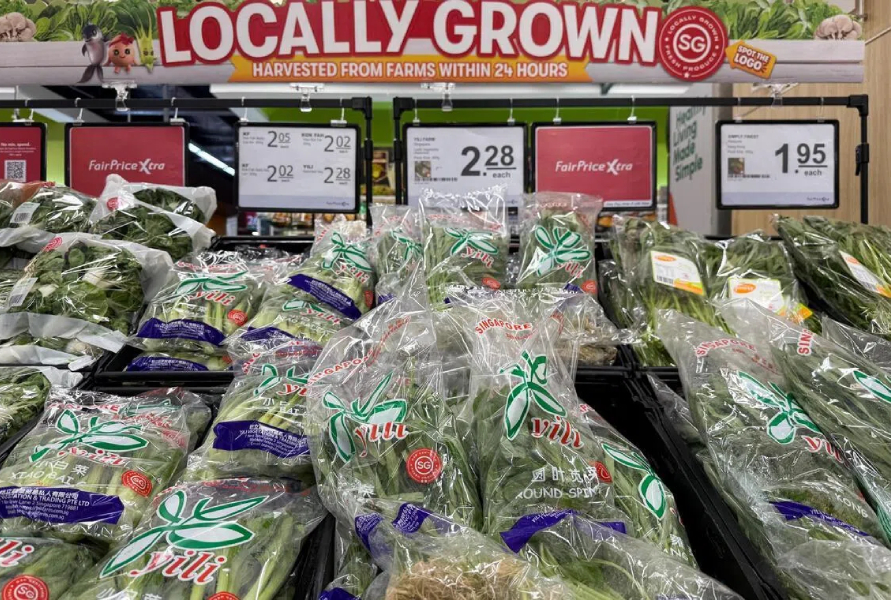
When ST visited three FairPrice outlets in VivoCity, Ang Mo Kio Hub and Tiong Bahru Plaza, local produce seen on the shelves came from brands such as Green Harvest, South-east Asia's largest hydroponic glass greenhouse; Hydrogreens, a brand from the world's tallest indoor vertical farm, Greenphyto; SG Farmers' Market; Yili; Sustenir; Sakura, which supplies bean sprouts; and Kin Yan Agrotech, which supplies gourmet mushrooms.
Each outlet had seven to 10 types of local vegetables for sale.
According to its website, FairPrice is the largest retailer in Singapore with around 160 outlets.
Local farms have been grappling with higher electricity, transport and fertiliser costs due to the Iran-US conflict and resulting energy crisis.
An e-mail in late June sent by FairPrice to the affected farms listed the specific products affected by a "category assortment refresh" for vegetables, with a target to completely delist those items by Aug 13.
"We truly appreciate your continued partnership and thank you for your ongoing support throughout this transition," said the e-mail seen by ST.
On July 2, FairPrice held a meeting with affected farmers and suppliers to address questions and explain its decisions, ST understands.
Following the meeting, Artisan Green's founder, Ray Poh, is hoping that he can negotiate with FairPrice to continue selling some of its products. The farm has three products on shelves that could be delisted: baby spinach, lettuce medley and Kallang raw kale and spinach mix, which cost S$5.40 to S$6.90 a pack.
"There's room to discuss and also to set common goals together on what local produce should be on the shelves. If we have plans that can meet their targets to optimise the range, I believe they'll work with us on it," he said.
Artisan Green will refresh its products' pricing once its 2ha farm opens in late 2026, when the "scale will be much larger and operations more productive", said Poh. His vertical farm in Kallang is 300 sq m.
"When supermarkets help local farms scale up, we become more cost-efficient, and that's what narrows the price gap over time."
Artisan's produce will continue to be sold at Cold Storage, Little Farms, Meidi-ya and Ryan's Grocery outlets, as well as RedMart. The farm also supplies to hotels and restaurants.
However, for SG Veg Farms and Netafarm, nearly all of their harvests go to FairPrice outlets.
SG Veg Farms' founder Eyleen Goh, who oversees two rooftop farms in Sembawang, said: "We now have to urgently find alternative sales channels, and replacing such a large sales volume within a short timeframe is extremely challenging. Without doing so, the farm's viability would be at serious risk."
She was informed of the decision in June. "This comes on top of the many challenges local farms already face, including rising operating costs, higher fuel prices, unpredictable weather and increasing production costs," she said.
Goh said the latest development might point to a market demand issue, where local farms not only have to compete with cheaper imports but also among themselves.
She added: "We understand that retailers have to make commercial decisions. This could happen with any retailer. We hope this situation highlights a broader issue facing Singapore's local farming ecosystem - how do we ensure that market demand, shelf space and consumer support grow alongside local production?"
Under the S.Veggies brand, SG Veg Farms' Asian leafy vegetables retail at S$1.65 to S$2.98 a pack at 15 to 20 FairPrice outlets.
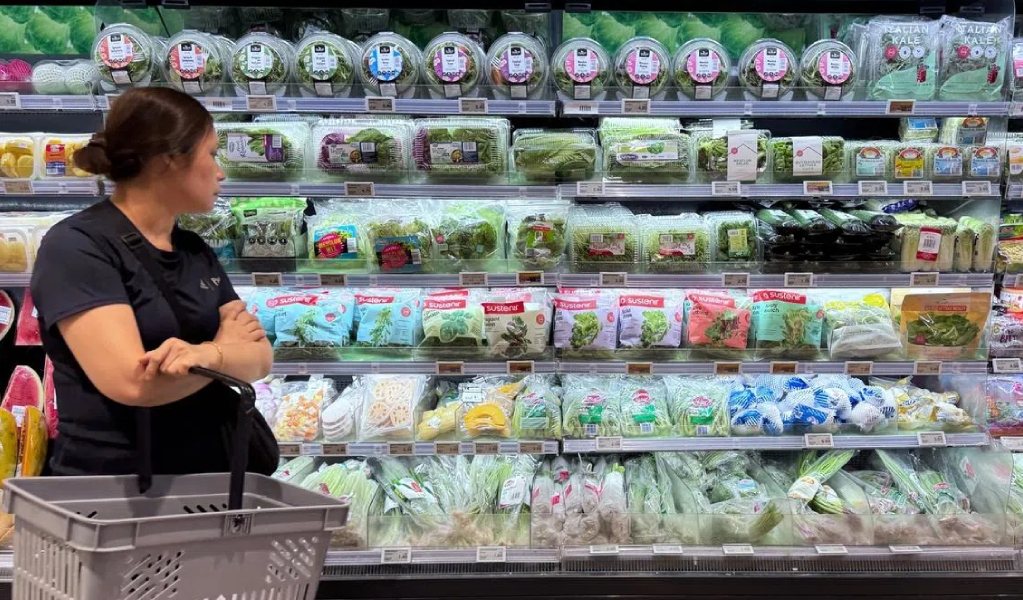
Local vegetables can cost up to 1½ times more than Malaysian or Chinese imports. While many consumers vote with their wallets, others opt for Singapore-grown greens, saying they are fresher and free of harmful pesticides.
Agri-food consultant Lee Eng Keat advised farms to always have a suite of sales channels, as relying on one grocer or client can be risky.
"This is not easy as some of the farms lack scale and don't have the volumes nor bargaining power to explore options. But not doing so runs the risk of feast-to-famine that some farms face," he added.
Supermarkets should also give sufficient notice to suppliers regarding their plans to review their products, he pointed out.
Netafarm - a subsidiary of climate solutions firm Netatech Group - has had to significantly scale down its farm in Neo Tiew after exiting FairPrice recently.
Once producing 60,000 packs of Asian leafy greens, lettuce and kale every month, it now sells up to 1,000 packs every month directly to long-term customers, said David Tan, Netatech's group chief executive.
He worries for the eight farmers who have lost their jobs.
"I understand that retailers must make difficult commercial decisions. Shelf space is limited, and businesses have to remain competitive. But I hope there can also be room for compassion," he said.
RedMart said it currently partners 13 local vegetable farms and is in the process of onboarding six more vegetable and mushroom farms.
Cold Storage offers local vegetables from six brands, including bean sprouts from Bean Farm, as well as Hydrogreens and MEOD.
"Our supplier portfolio may evolve over time based on factors such as product quality, availability and customer demand," said Cold Storage.
FairPrice Group said it has listened carefully to the feedback from suppliers and farms, and is working closely with them to address their concerns where possible. "We will continue to work closely with our local and overseas partners to support a resilient, sustainable supply of fresh produce while meeting the evolving needs of our customers," said the chain.
[[nid:720868]]
This article was first published in The Straits Times. Permission required for reproduction.



