The Circle Line will finally become a complete loop on July 12, with the opening of a 4km tunnel connecting Marina Bay and HarbourFront MRT stations.
In a media sharing session on Wednesday (June 17), the Land Transport Authority (LTA) highlighted the care it has taken to minimise disruption to the Singapore landscape and commuters during the construction and system integration of phase 6 of the Circle Line (CCL6).
This phase sees three new stations (Keppel, Cantonment and Prince Edward Road) and an extended Kim Chuan Depot added to the existing network.
Between the new Keppel and Cantonment MRT stations, engineers faced the challenge of tunneling between two Keppel Viaduct piers to complete the Circle Line track.
In a bid to ensure minimal disruption, engineers had to cut through a total of seven piles belonging to two piers — which are vertical support structures — holding the viaduct up while still allowing traffic to continue overhead.
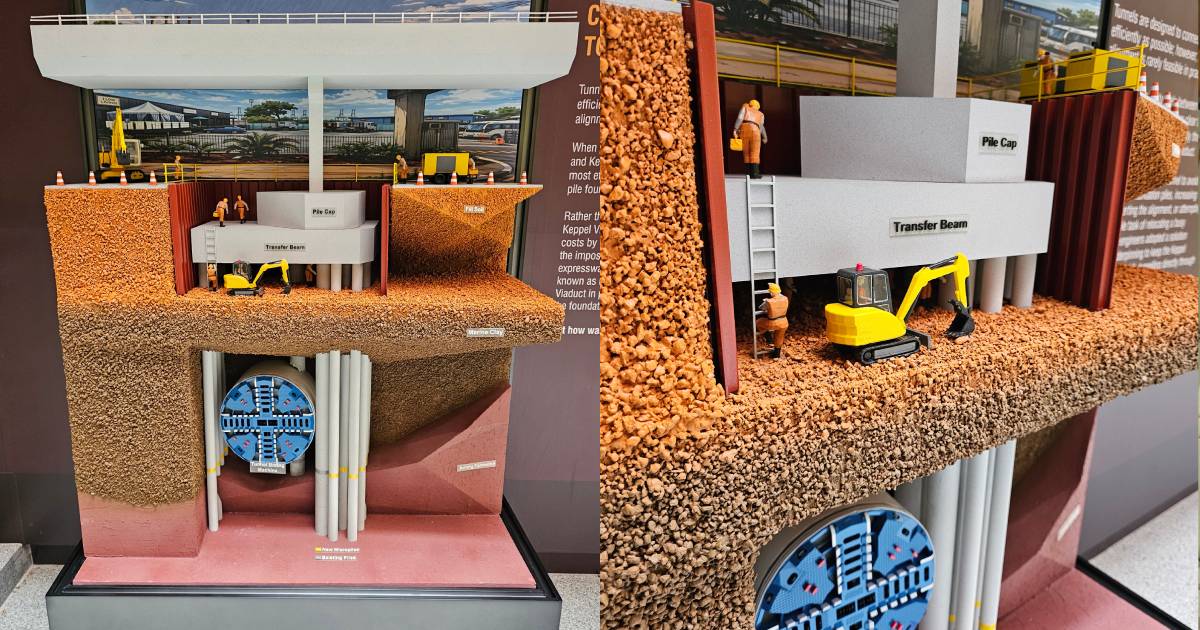
To maintain the structural integrity of the viaduct, numerous micro-piles with 400mm-diameter each were constructed and hydraulic jacks used to sustain the weight of the bridge during tunnelling.
The process took eight months of preparation, even though the cutting took just a few days, and successfully avoided any disruption to the traffic on the viaduct, said an LTA spokesperson.
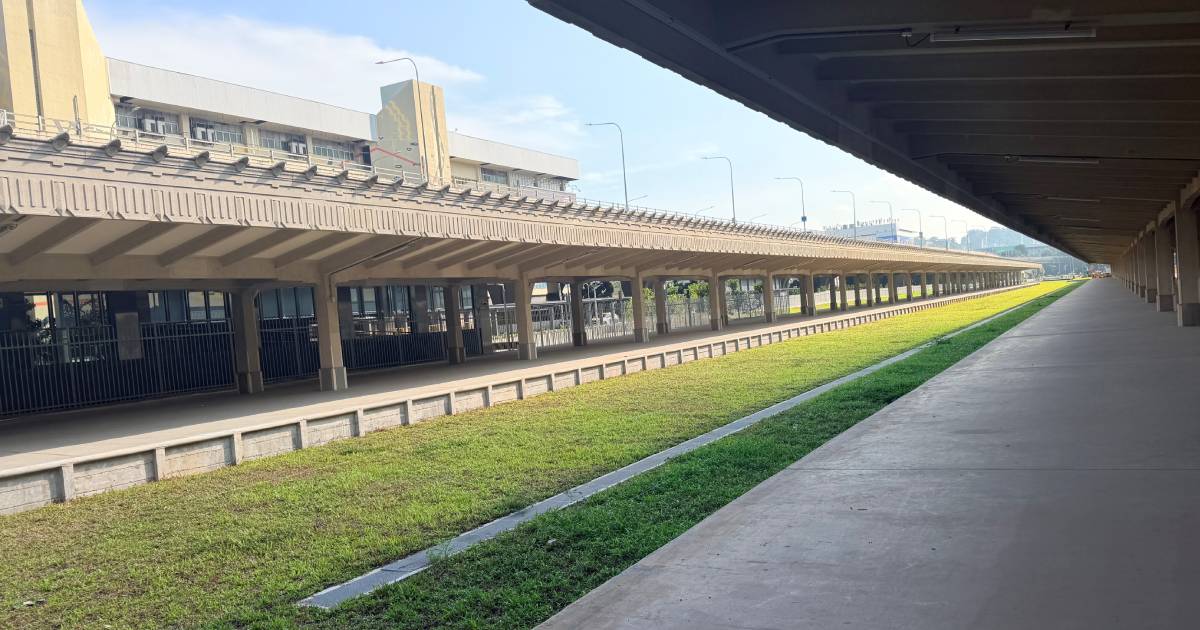
The Tanjong Pagar Railway Station between Cantonment and Prince Edward Road MRT stations was also preserved despite being less than 7m below the tunnelling route.
About 580m of the former railway station's canopy structure was carefully cut into 63 pieces and temporarily relocated to make way for the construction of the Circle Line underneath.
The pieces were then restored back to the gazetted national monument once the tunnelling works were complete.
On top of the three new stations, the Kim Chuan Depot has also been expanded from 11ha to about 27ha to accommodate the 23 new trains brought in to facilitate Circle Line operations.
Complex systems integration process
LTA also explained the challenging process of systems integration required for CCL6.
Systems integration refers to the process of linking the new stations with the rest of the Circle Line network.
"It was more complex than other rail extensions as it completes the Circle Line into a full loop," said the LTA spokesperson.
Testing was required for the continuous operations in both clockwise and anti-clockwise directions across a range of service patterns and operating scenarios.
LTA carried out Early Closure Late Opening testing over about five-and-a-half months, starting in September to December 2025.
Each night, during the 10 hours of that period, more than 100 personnel from LTA, SMRT and contractors were deployed across various parts of the Circle Line.
After tunnel strengthening works, systems integration testing continued from April to May this year, permanently migrating its system on April 12.
The LTA spokesperson said that it was relatively harder to conduct this exercise for the Circle Line because of the mismatch between older systems from 17 years ago and newer systems.
They had to ensure that the passenger information displayed and announced the correct service information.
Commuters are invited to a public preview from 9.30am to 9pm on July 4.
The public can look out for the unique architectural elements and artworks by local artists on display at each of the three new stations, with a placemaking exhibit at Keppel station featuring the construction efforts behind the final phase of the Circle Line.
[[nid:737727]]
[email protected]


