Flight delays and diversions from Changi Airport due to bad weather have seen a sixfold increase — rising from nine incidents between January and November 2024 to 55 in the same period this year, said the Civil Aviation Authority of Singapore (CAAS) on Tuesday (Dec 9).
In a joint statement with the National Environment Agency (NEA), the two agencies announced the establishment of a new multidisciplinary aviation meteorological programme.
Said CAAS and NEA: "The programme brings together aviation and meteorological experts, as well as aviation companies and unions, to build research and development and operations capabilities."
The two agencies envision these efforts to lead to better prediction, mitigation and management of the effects of weather on air traffic control, airlines and airport operations.
5 priority areas
One of the five priority areas under the new programme is lightning. According to the Changi Climate Station, Singapore experiences lightning on nearly one in every two days.
Lightning poses risks to airside workers, disrupts airport operations, and delays flight and baggage handling, said CAAS.
The agency also highlighted that when Changi Airport Terminal 5 is completed in mid-2030s, the airport's footprint will double, posing additional operational challenges.
NEA currently issues lightning risk notifications based on a 6km safety radius around the airport.
The two agencies aim to enhance worker safety, reduce downtime and enable more targeted zone-based approach to lightning risk management by improving lightning forecast precision.
This will be done by building a more precise density map of lightning strikes at Changi Airport based on historical data, and an electromagnetic modelling of lightning interaction with aircraft, airport infrastructure and human beings.
Turbulence will also be on the weatherman's radar given how severe turbulence incidents have risen globally, posing safety risks to passengers and crew.
In May 2024, an extreme turbulence event on a Singapore-bound Singapore Airlines flight SQ321 left one passenger dead and 30 people injured.
[[nid:685057]]
In September 2025, Singapore became the first country to classify severe turbulence as a major in-flight risk.
Through the programme, CAAS and NEA aim to strengthen in-flight turbulence prediction and provide airlines with more timely, reliable and actionable weather information.
The three other priority areas under the programme are: thunderstorms causing wind shear; surface winds affecting runway changes for landing and take-off; and, the effect of aircraft condensation trails on global warming.
A steering committee for the programme, led by CAAS director-general Han Kok Juan and NEA chief executive Wong Kang Jet, will include representatives from Changi Airport Group, Singapore Airlines (SIA), SIA Engineering, Sats, the labour movement, and the International Centre for Aviation Innovation (ICAI).
Regional partners
Recognising that weather patterns happen across geographical boundaries, CAAS and NEA have also signed a letter of intent to collaborate with six other providers of air navigation services and meteorological services.
Both the Civil Air Navigation Services Organisation and the ICAI are also partners of this regional collaboration initiative.
Together, the parties will address the effects of weather on aviation operations.
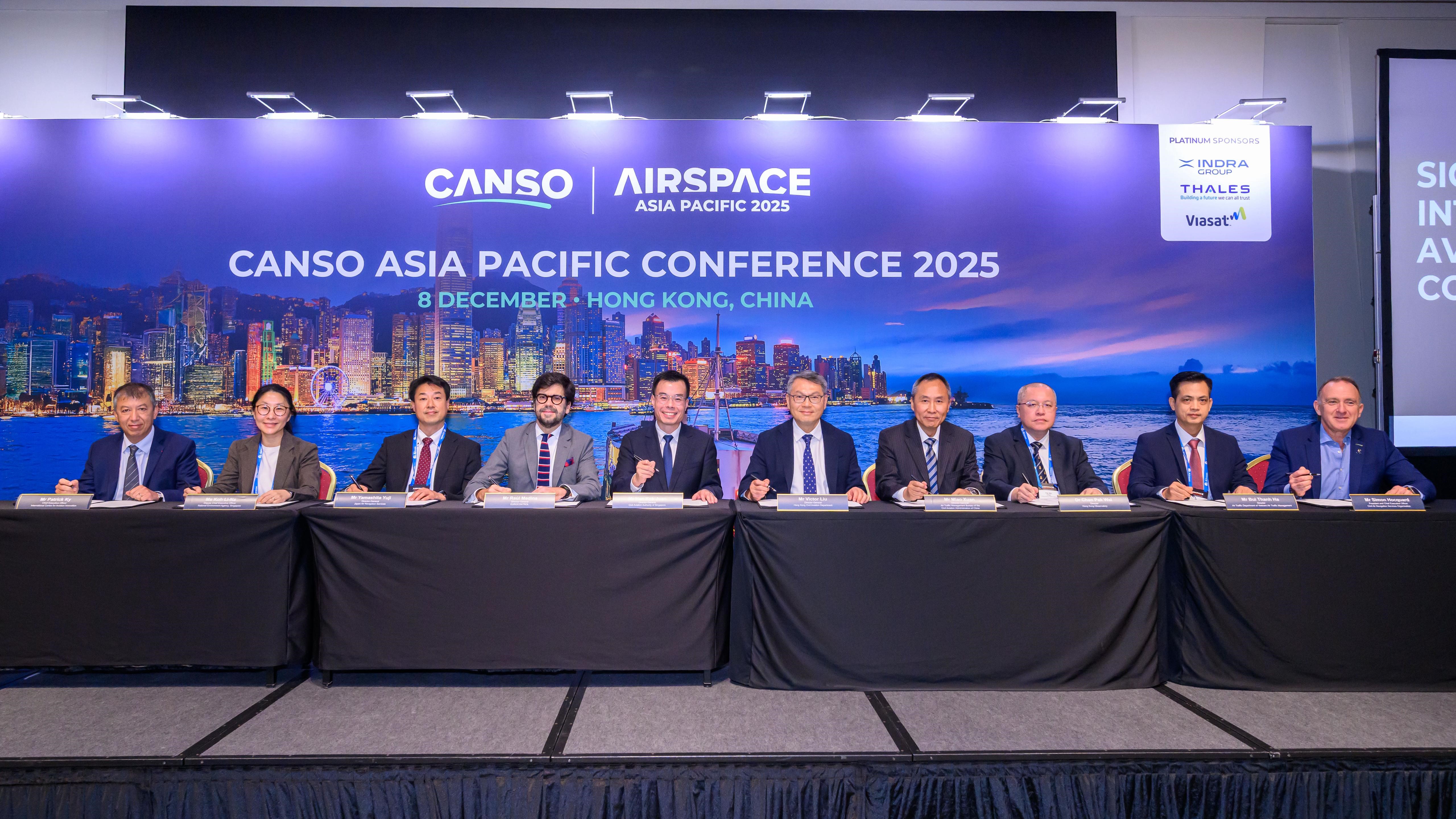
Han said that CAAS takes seriously the changes in weather patterns and their effect on aviation operations.
CASS will leverage technology, including artificial intelligence, to integrate national aviation, meteorology expertise and regional partnership, he added.
Director-General of the Meteorological Service Singapore Koh Li-Na added that the regional initiative provides opportunities for meteorological service providers to improve the predictability of weather systems in the region.
[[nid:726141]]
[email protected]




