Housing developers undertaking large-scale complex projects, including larger collective sale redevelopments, will now have more time to build and sell off all the units in the development.
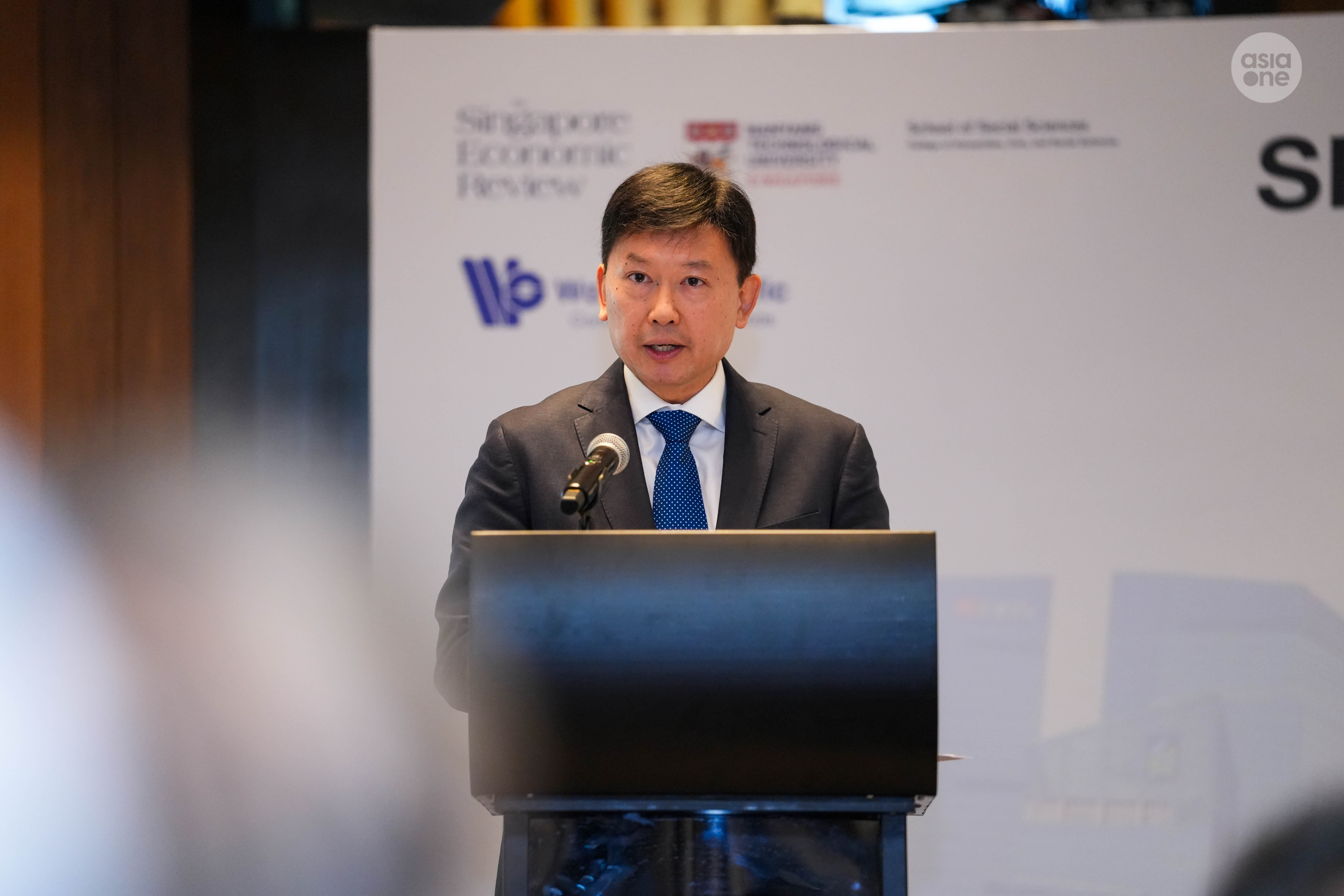
"We want to incentivise private developers to intensify their use by rejuvenating ageing residential sites, including larger sites where redevelopment will require a longer duration," said Minister for National Development Chee Hong Tat at the Singapore Economic Review Conference held at Orchard Hotel Singapore on Tuesday (July 28).
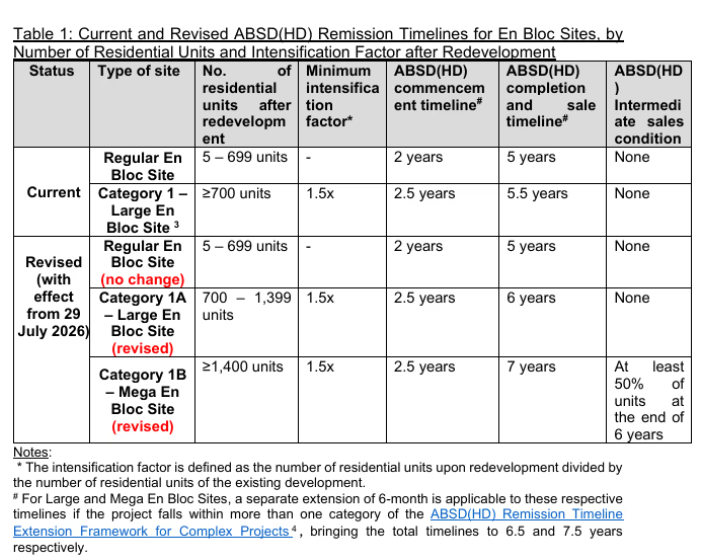
Under new rules that take effect on Wednesday (July 29), developers of projects yielding between 700 and 1,399 residential units will have their completion and sale timelines extended to six years, from 5.5 years currently. Projects yielding at least 1,400 residential units will have their completion and sale timelines extended to seven years.
"These changes are intended to set the right incentives for developers to rejuvenate larger estates, so that we can encourage more than rejuvenation, and achieve an outcome which is good for society as a whole," Chee explained.
Existing ABSD rules
Currently, licensed home developers purchasing residential land are subject to 40 per cent Additional Buyer's Stamp Duty (ABSD), comprising a 5 per cent non-remittable component and a 35 per cent upfront remittable component.
The upfront remittable component, together with interest, will be clawed back if a housing development does not commence within two years from the date of site acquisition, or if the project is not completed within five years.
The clawback also applies if all housing units are not sold within five years of the site's acquisition.
In a joint press release on Tuesday, the Ministry of Finance (MOF) and Ministry of National Development (MND) said these conditions are in place to ensure the timely injection of housing supply and encourage housing developers to bid prudently for land.
In March 2025, the government implemented the ABSD remission timeline extension framework for complex projects, allowing projects within one of four defined categories to be eligible for a six-month extension, or a 12-month extension if they fall within more than one category.
The categories are:
- Category 1. En bloc projects that can yield at least 700 units upon redevelopment, and where the redevelopment yield is at least 1.5 times that of the original development.
- Category 2. Projects with complex technical or infrastructural requirements.
- Category 3. Projects approved under the Strategic Development Initiative (SD).
- Category 4. Projects that aim to achieve higher productivity targets through the adoption of nascent construction technologies, methodologies or progressive practices.
How the new rules apply
In their joint statement, the ministries said that the enhancements are intended to further support developers in undertaking large-scale redevelopment projects, thereby facilitating the sites' rejuvenation and availing additional housing supply to the market.
Under the enhancements to the remission framework, large sites, which yield at least 700 residential units but less than 1,400 units upon redevelopment will receive an extension to their completion and sale timelines — from the current 5.5 years, to six years.
Meanwhile, sites which yield at least 1,400 residential units upon redevelopment will be extended to seven years, up from the current 5.5 years.
The Government will also implement an intermediate sales condition for mega sites, requiring developers to sell a minimum of 50 per cent of the residential units within six years.
Developers who fail to do so will incur the full clawback on the 35 per cent upfront remittable component of the ABSD, together with interest, at the end of the six-year period.
MOF and MND said this condition is intended to ensure the timely release of housing supply for sale by developers.
Despite the extensions, developers for large and mega projects are still required to commence their projects at 2.5 years from the date of site acquisition.
Developers must also ensure that the number of residential units upon redevelopment is at least 1.5 times the number of residential units of the existing development.
Projects that qualify for more than one category of the framework will also be given an addition extension of six months.
This means that such developers can commence their projects by the third year of land acquisition. Their completion and sale times will also be extended accordingly to 6.5 years for large sites and 7.5 years for mega sites.
Setting out his approach as national development minister, Chee, who has taken over from Senior Minister K. Shanmugam as deputy chairman of the Inter-Ministerial Committee (IMC) on Pro-Enterprise Rules Review, said MND will press on with their ongoing reviews to help its built environment stakeholders "save time, save costs, and save manpower."
On his additional responsibilities at the IMC, Chee shared that one of his priorities is to go beyond addressing industry feedback on regulatory pain points and proactively examine how the Government's policies and rules can facilitate and enable new growth opportunities.
[[nid:740452]]
[email protected]




