To commemorate SGLaw200, the bicentennial of Singapore's modern legal system, the Ministry of Law launched a landmark four-volume book series today (July 28), titled 25 Years of Legal Reform in Singapore: Innovations in Policy and Law (2000-2025).
The launch, held at Gardens by the Bay, was attended by about 200 guests from the legal sector, including editors and contributors to the series, and officiated by Senior Minister Lee Hsien Loong, Senior Minister K Shanmugam SC, Minister for Law Edwin Tong, and Professor Yip Man, the Managing Editor of the series.
Documenting 25 years of law reform
Speaking at the launch, Minister for Law and Second Minister for Home Affairs Edwin Tong acknowledged how, "a legal system is never finished".
"It must continually be renewed, refined, and sometimes reshaped to meet new realities," he adds.

Across four volumes, this series details how the legal system adapted to social shifts, new technology, and major disruptions, like the Covid-19 pandemic. It highlights key reforms across criminal, family, public, and civil law, restructuring, IP, and international dispute resolution.
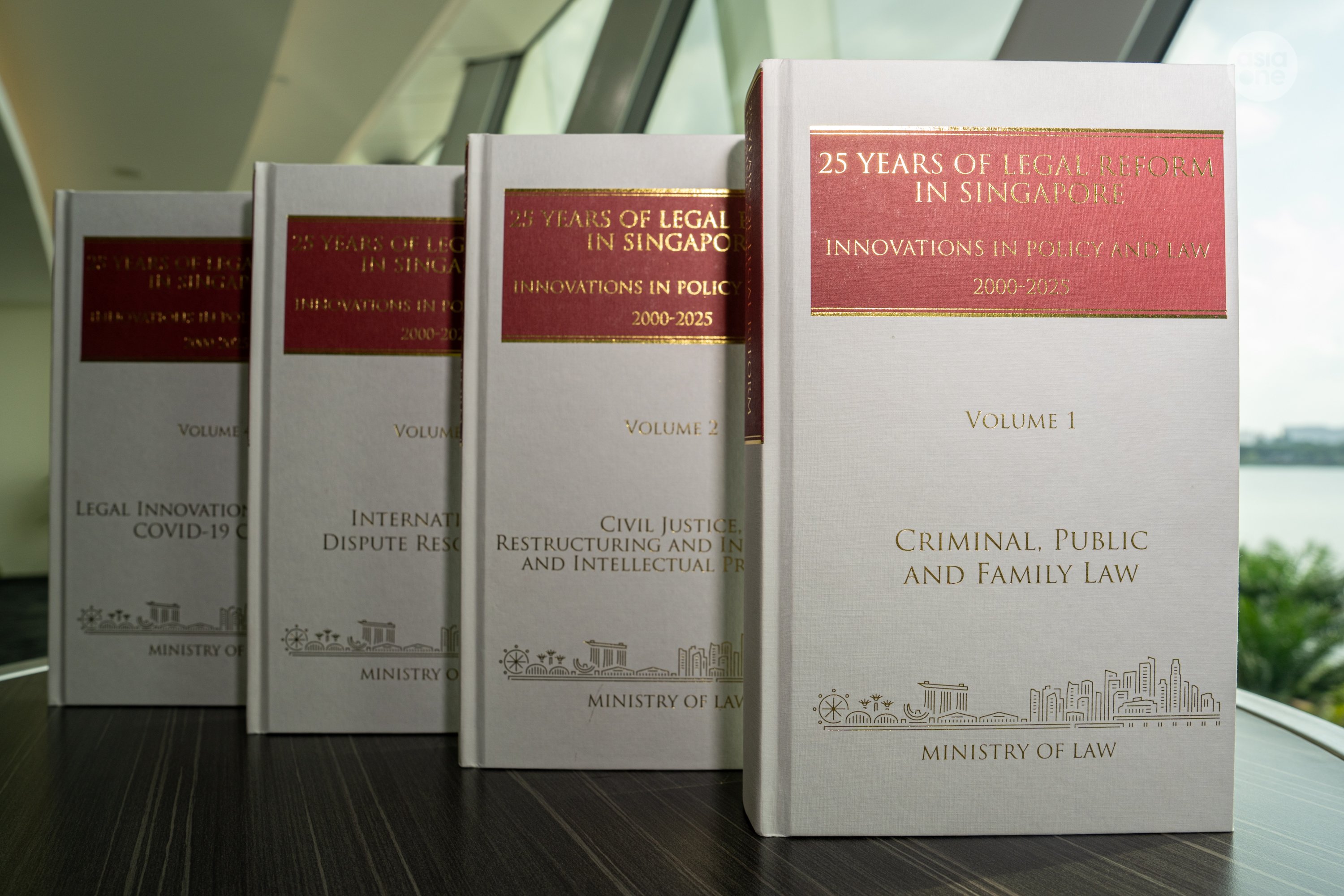
Together, they offer a broad look at how Singapore's laws have been updated to keep pace with societal change while strengthening trust in its legal institutions.
Laws shaped by changing needs
Also present at the event was Senior Minister K Shanmugam who oversaw much of the reform as Singapore's Minister of Law from 2008 to 2025.
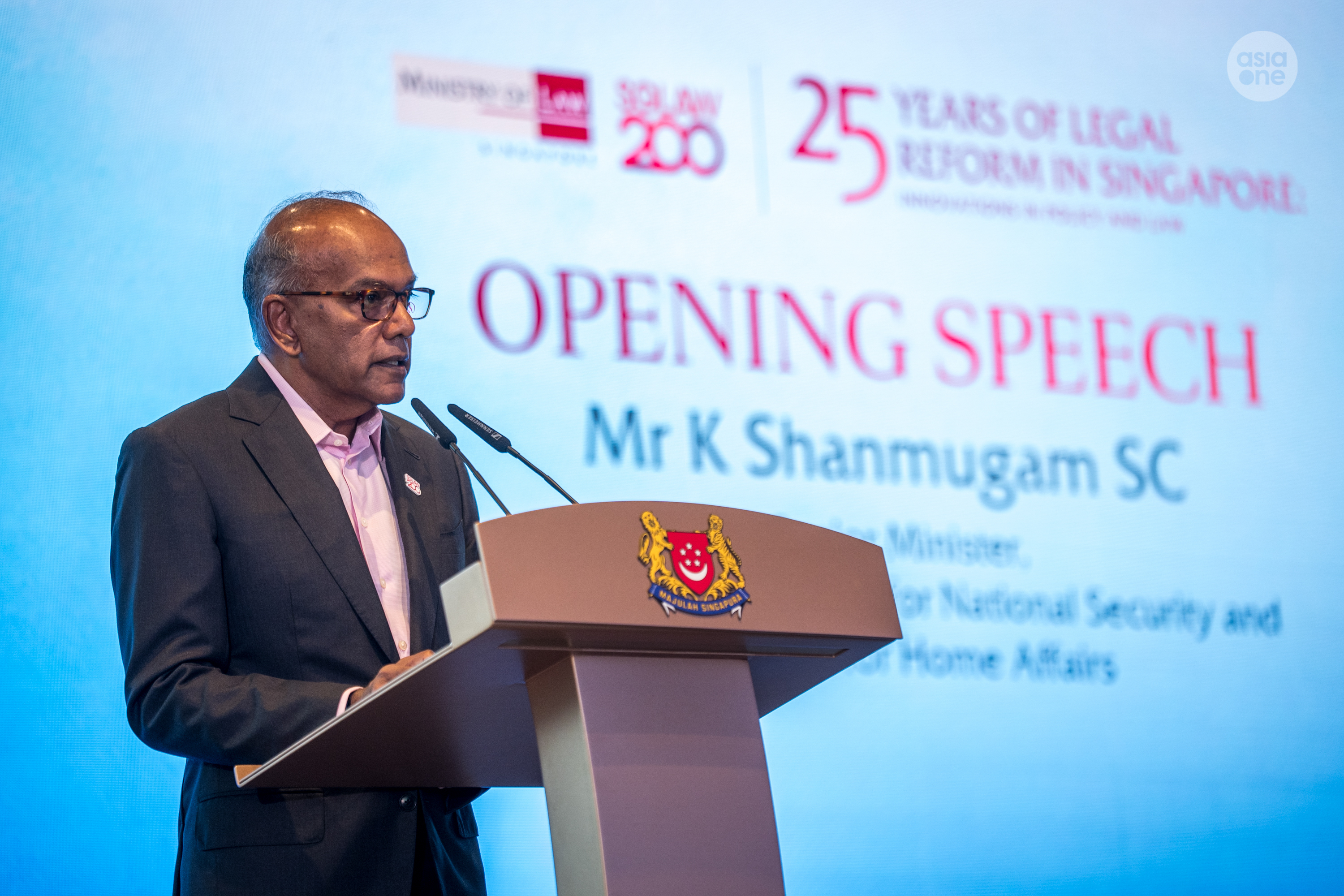
He cited Covid-19 as an example of how law reform had to move quickly in response to an unprecedented crisis.
According to Shanmugam, the first Covid-19 legislation was conceptualised and drafted in about nine days, with the framework later amended eight times as conditions changed on the ground. The measures brought practical relief to tens of thousands of people, including tenants affected by the pandemic and couples whose weddings could no longer proceed.
@asiaone Speaking at the launch of a book series to commemorate 25 years of legal reform in Singapore on Tuesday (July 28), Senior Minister K. Shanmugam, who was Law Minister between 2008 and 2025, shared how law reform and changes to laws came about, adding that these must serve Singapore's needs. #sgnews #Singapore #Law ♬ original sound - AsiaOne
SM Lee also chimed in with how it is important to respond to changing societal values and norms.
He highlighted the repeal of Section 377A to illustrate how laws must reflect changing social norms.
To handle this complex issue, the government engaged extensively with various community, religious, and LGBT groups, reaching a balanced consensus that accommodated opposing views rather than taking a zero-sum approach.

SM Lee said, "Instead of allowing a divisive issue to fester into a lasting social schism, we worked to preserve the common space where Singaporeans with different convictions could continue to live together harmoniously and with mutual respect."
Meeting the challenges ahead
Looking ahead, Singapore's legal system faces a fresh wave of complex issues - from artificial intelligence and online harms to climate change and geopolitical uncertainty.
Tackling these challenges will require future generations to "appreciate the judgments and trade-offs that law reform requires," Senior Minister Lee Hsien Loong noted.
By building on past foundations, Singapore aims to keep its laws strong enough to protect the public, yet flexible enough to handle whatever comes next.
@asiaone Speaking at the launch of a book series to mark 25 years of legal reform in Singapore, SM Lee Hsien Loong, who was prime minister through most of this period, sets out the importance of laws in being able to address national imperatives respond to new challenges, including crises; and, societal changes. SM Lee also explained why beyond laws, institutions and values matter alongside. #sgnews #Singapore #Law ♬ original sound - AsiaOne
[email protected]




